
How to Run Python in Production?
12 articles · 12 projects · 1 audio/video
Articles & Tutorials
- Python 3.14 t-string is Coming - How Does It Differ from f-string?
Why design t-string when Python already has f-string? This article explains the reasoning behind PEP-750's t-string design and serves as a comprehensive t-string tutorial, covering basic use cases and several advanced techniques.
- Debugging Python f-string errors
The author encountered an interesting bug:
f"{x}"threw a TypeError, butstr(x)worked fine. The article walks through the debugging process, analyzing the underlying mechanics of f-string string interpolation, ultimately discovering it was an issue with the Temporal workflow orchestration engine. - Python 3.14: A Giant Leap for the Python World
Explores Python 3.14's major improvements in the debugging ecosystem. PEP-768 allows users to remotely inject debugging code into a Python process, enabling debugging tools to perform non-intrusive debugging and observation of Python processes in better ways.
- PEP 790 – Python 3.15 Release Schedule
Python 3.15's development and release schedule has been announced: 17-month development cycle starting June 6, 2025, alpha 1 release on October 14, 2025, beta 1 on May 5, 2026, and final release on October 1, 2026.
- Takeaways from DjangoCon EU 2025
The author shares insights from attending this year's DjangoCon, including database optimization tips, performance testing methods, network algorithm adjustments, query analysis techniques, multiple practical tools, and best practices.
- How to Add Blazing Fast Search to Your Django Site with Meilisearch
Introduces how to integrate Meilisearch into Django projects for efficient full-text search functionality. Covers configuring Meilisearch with Docker, defining search schemas with Pydantic, and implementing automatic and batch index updates through custom model methods and Django management commands.
- PyXL - GPIO Benchmark
Introduces PyXL, a custom processor that can execute Python code directly at the hardware level - no VM, no interpreter, no JIT, no C language. GPIO loops take only 480 nanoseconds, 30x faster than MicroPython, with a 50x advantage when normalized for clock speed.
- Automating code deletion with Gemini (and a little Python)
Shares how to efficiently use Gemini 2.0 Flash for code generation/refactoring, achieving automated deletion of over 200 GN build files. Discusses leveraging AI and regular scripts in hybrid approaches for tedious coding tasks.
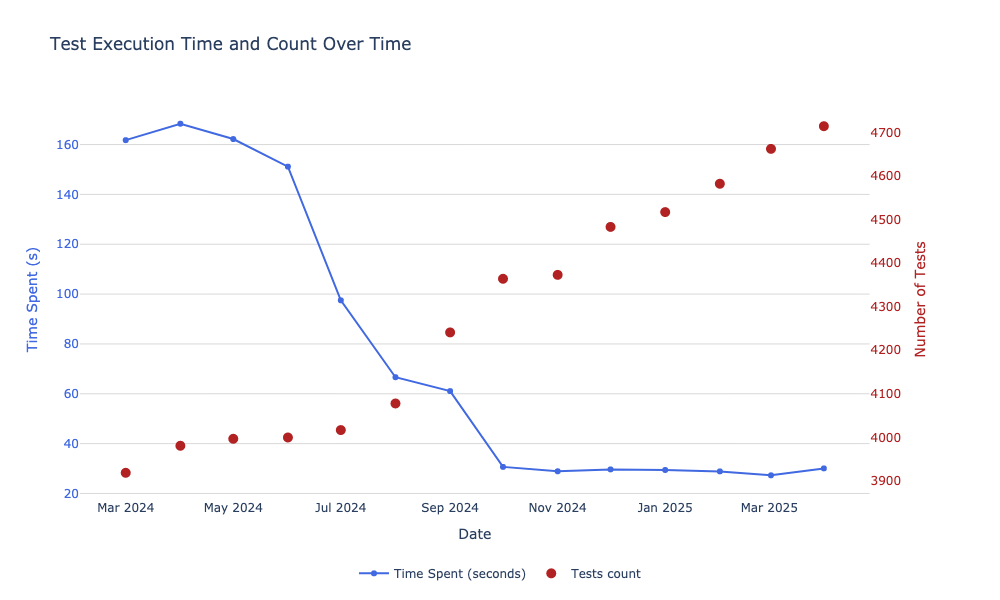
- Making PyPI's test suite 81% faster
Describes how they systematically optimized Warehouse's (the backend powering PyPI) test suite, reducing execution time from 163 seconds to 30 seconds while growing the test count from 3,900 to over 4,700.
- Python type hints: mixin classes
How to add type hints to Python mixin classes? The article introduces solutions for two scenarios: base class inheritance and protocol definition, improving type safety and maintainability of mixin classes.
- Remember the walrus operator
Are you familiar with the walrus operator (PEP-572) introduced in Python 3.8? When should you use it, what benefits does it bring, and how does it impact code readability?
- How Software Engineers Actually Use AI
A survey report published by Wired, surveying 730 developers to understand how they use AI chatbots at work, usage frequency, and how they evaluate AI. AI is changing programming work but is far from replacing programmers.
Projects & Resources
- pyrefly: A fast type checker and IDE for Python
Meta's Python type checking tool in development, planned to completely replace Pyre by the end of 2025. Built with Rust, aiming to improve performance and provide new features like generating typed ASTs.
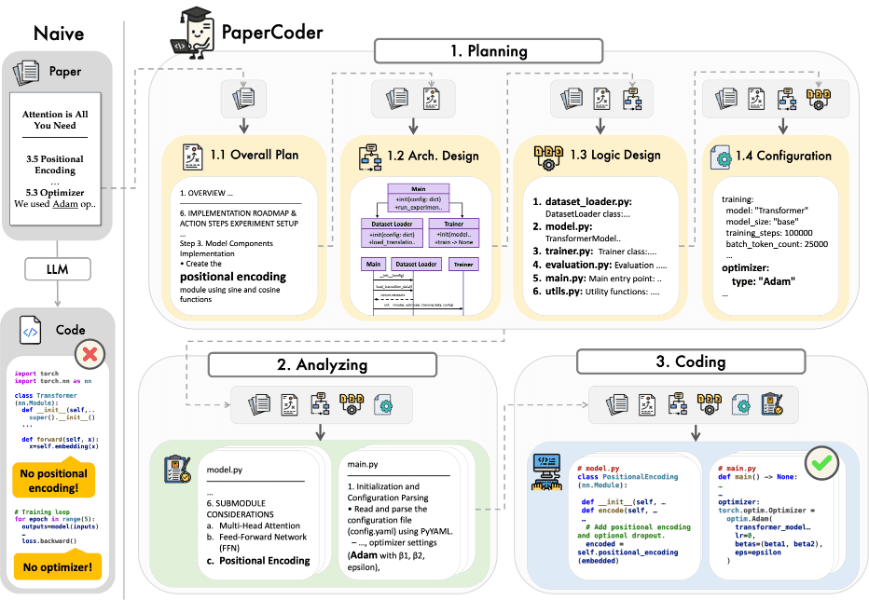
- Paper2Code: Automating Code Generation from Scientific Papers in Machine Learning
A multi-agent LLM system that automatically converts papers into code. Follows a three-stage process: planning, analysis, and code generation, with each stage handled by specialized agents. (1K stars)
- aiwaf: An Adaptive AI‑Powered Web Application Firewall for Django
Can perform anomaly detection, block suspicious IPs, prevent UUID tampering, block honeypot field exploitation, and continuously improve through daily retraining based on logs.
- picologging: An optimized logging library for Python
Microsoft's open-source Python logging library, 4-17x faster than the standard library's
loggingmodule. - Agentfy: Agentfy is a modular microservices architecture
A modular, multi-agent coordination system designed specifically for automating tasks in social media, with deep integration for TikTok, Instagram, YouTube, X, Quora, WhatsApp, and other platforms.
- glyphx: A next-gen Python plotting library with SVG-first rendering
An alternative to
matplotlib.pyplotwith SVG-based interactive charts, providing clean, high-quality rendering. - sdk-python: Temporal Python SDK
Open-source distributed, scalable workflow orchestration engine supporting self-hosted and cloud service deployment, with persistent execution, automatic retry mechanisms, and secure one-way connections.
- mininterface: A minimal interface to Python application (GUI, TUI, CLI, web)
Automatically generates GUI, TUI, and CLI through simple code without manually writing interface code. Automatically handles configuration file reading and parsing, simplifying configuration management.
- asv: A simple Python benchmarking tool with web-based reporting
A tool for benchmarking Python packages throughout their entire lifecycle, with results displayed as an interactive web frontend.
- nbdime: Tools for diffing and merging of Jupyter notebooks.
Jupyter's official open-source tool providing structured diff and merge functionality for Jupyter Notebooks. (2.7K stars)
- Qwen3: the large language model series developed by Qwen team, Alibaba Cloud.
Alibaba's latest open-source large model, pioneering dynamic switching between "fast thinking (non-reasoning mode)" and "slow thinking (deep reasoning mode)", with mathematical reasoning capabilities surpassing GPT-4 and other models. (20K stars)
- Kimi-Audio: an open-source audio foundation model excelling in audio understanding, generation, and conversation
Moonshot AI's open-source general audio foundation model, trained on 13 million hours of diverse audio data, achieving multiple SOTA performance breakthroughs in speech recognition, audio understanding, and generation tasks. (3.3K stars)
Podcasts & Videos
- Python Decorators Considered Harmful
This video reveals concerning aspects of Python decorators, as they can break code type safety, hide function dependencies, and make debugging difficult.