The Python Software Foundation voluntarily withdrew its $1.5 million funding application to the US National Science Foundation, because the grant terms required PSF to pledge not to run any projects advancing diversity, equity and inclusion. The PSF board unanimously decided to stand by its values rather than betray its mission of supporting a diverse Python community.
TL;DR
The PSF withdraws its $1.5M US government grant proposal, the CPython Core Dev Sprint posts record attendance, and uv is declared the best thing to happen to Python in a decade.
Articles & Tutorials
× 12Arm's Cambridge headquarters hosted the largest CPython core developer sprint to date, bringing 48 developers together for in-depth technical exchange. The event covered core topics including the JIT compiler, performance optimization, package management and language design, driving important progress on free-threading and documentation improvements.
Why can OrderedDict remember insertion order while a regular dict cannot? The author dives into the internals of the OrderedDict type and reveals the root cause of its ordered behavior: a doubly linked list is added on top of the dict to maintain order information, combined with an index dictionary for fast lookup. The article also shares interesting details such as the clever use of weakref to solve "circular references" and the design choice of using object() as a default value.
The author analyzes in depth the thread-safety issues of NumPy's test suite under parallel execution. By introducing the pytest-run-parallel plugin, they identified and fixed critical defects such as global state pollution and random seed conflicts, speeding up test execution several-fold.
Django signals look simple but hide a trap — when a signal handler fails, the entire transaction is rolled back. The author reveals the fundamental flaw in the signal mechanism and proposes a practical alternative: replacing synchronous signals with background task queues such as Celery, so signal exceptions no longer affect the main business flow.
uv rewrote the whole toolchain in Rust, making everything from version installation to dependency resolution astonishingly fast. The author compares uv's performance with traditional tools in detail, showing how it turns complex environment setup into a single command.
The author reproduced the core mechanisms of containers in fewer than 200 lines of Python code, from Linux namespaces to cgroups resource limits, with detailed code examples at every step.
Python 3.15, currently in development, has implemented PEP-686 and will enable UTF-8 mode by default. It unifies encoding for files, standard input/output and pipes to UTF-8, solving cross-platform encoding inconsistencies and improving interoperability with other languages.
How does technical debt accumulate at a startup? The author pulls no punches in recounting their own "dark history" — from a simple Django + React architecture to a microservices hell over-engineered in the name of "scalability". When should you stick with simplicity, and when is complexity actually needed?
The author shares underappreciated practical improvements in Python 3.14: the PDB debugger supports remote debugging and better breakpoint strategies, asyncio simplifies event loop management, argparse improves help text and error messages, and multiprocessing switches to the safer forkserver strategy on Linux.
A high-level domain-specific language from PyTorch that compiles PyTorch-like syntax into optimized Triton code. With an auto-tuning engine and implicit search spaces, developers can focus on algorithm logic rather than hardware details, achieving performance portability across hardware architectures.
A beautifully crafted interactive tutorial on caching, using animated visualizations to explain caching principles — from CPU multi-level caches to database caching strategies. Dynamic charts demonstrate core concepts such as hit-rate changes, temporal locality and spatial locality, making abstract caching mechanisms intuitive.
Projects & Resources
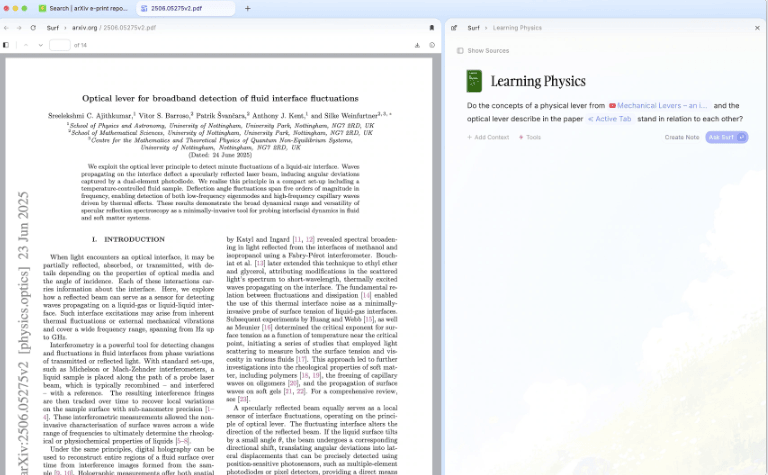
× 12An AI notebook tool that brings files and web pages directly into your thinking workflow, with multimedia resource management, intelligent note generation, @mentions, web search integration and interactive app development. Built with Svelte, TypeScript and Rust; cross-platform with local data storage. (star 2.3K)
An all-in-one tool for Quark Cloud Drive check-ins, automatic saves, naming cleanup, push notifications and media library refresh. Supports share-link subdirectories, smart file filtering, regex filename cleanup, multi-task management and Emby integration, with Docker deployment, a WebUI, multi-account management and plugins. Works with SmartStrm and Emby for automatic episode tracking. (star 2.1K)
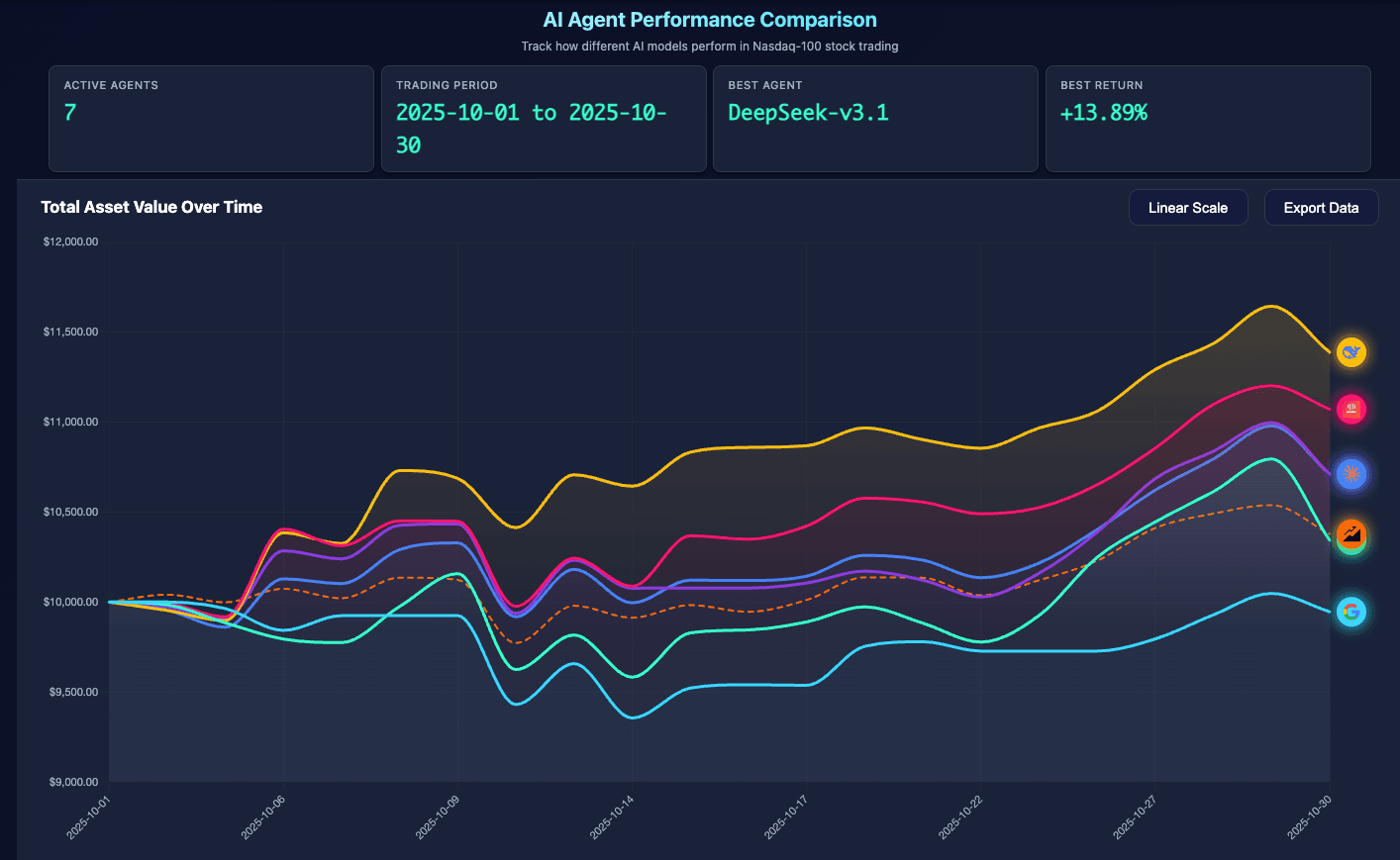
An experimental platform where five AI agents trade completely autonomously in the Nasdaq-100 market, featuring a multi-model arena, zero human intervention, real-time performance analysis and historical replay. Built on an MCP toolchain architecture and integrated with Jina search for market intelligence, it provides full trading records and return analysis — exploring AI's autonomous decision-making in financial markets. (star 7.9K)
A powerful CLI tool that breaks HTTP requests into stages — DNS, TCP connection, TLS handshake, server wait and transfer — and presents results as waterfall charts, compact summaries or metrics. Supports IPv4/IPv6 detection, TLS certificate analysis, multiple output modes, JSON export and proxy support. Written in Python with no system dependencies; ideal for interactive troubleshooting, regression analysis and performance baselines.
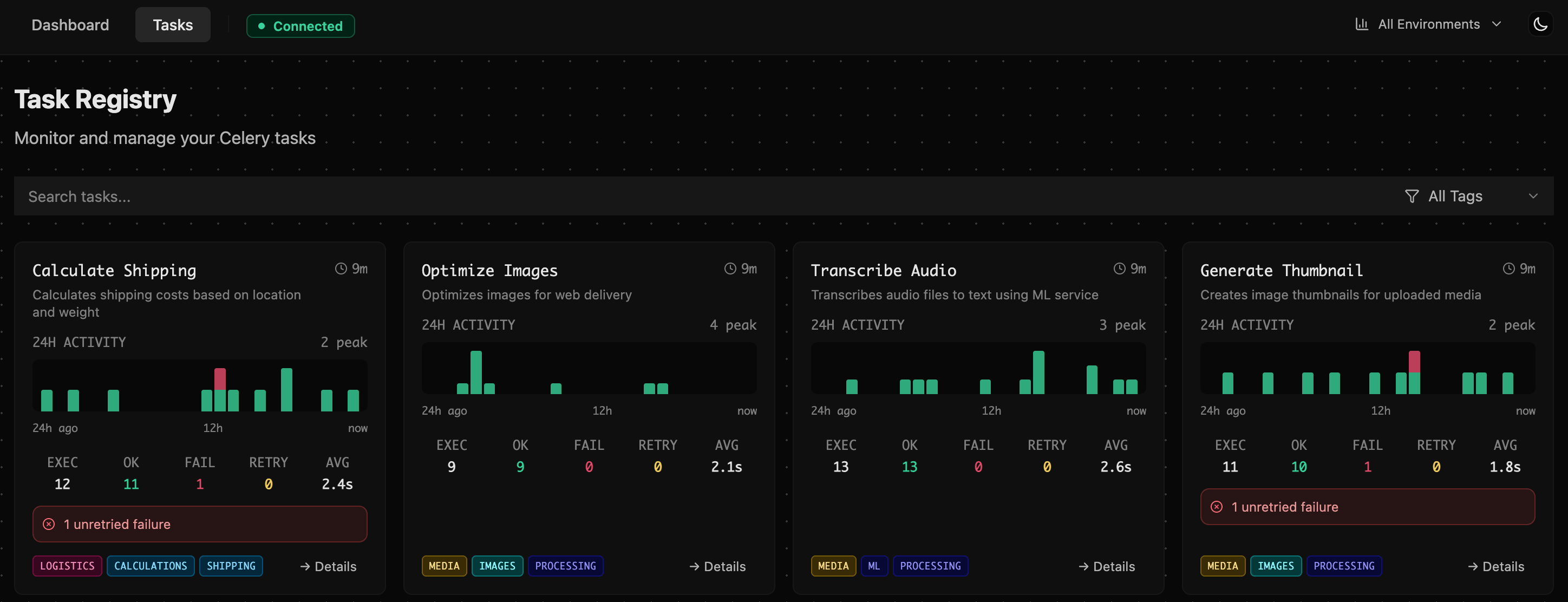
A real-time Celery task monitoring and management system with a friendly UI. Supports WebSocket live monitoring, task filtering and search, retry tracking, orphan detection, daily statistics and worker health monitoring. Offers Docker Compose quick deployment, basic auth and OAuth login, and works with RabbitMQ and Redis brokers — a more modern alternative to Flower.
NVIDIA's open-source AI-driven robot simulation platform built on Omniverse. Supports GPU-accelerated physics simulation, RTX sensor rendering, multiple robot format imports, reinforcement learning training, ROS integration and synthetic data generation. Includes the Isaac Lab framework for robot learning and digital-twin simulation, providing complete infrastructure for every stage of robot development. (star 1.8K)
A Python swarm-intelligence library integrating genetic algorithms, particle swarm optimization, simulated annealing, ant colony, immune algorithms, artificial fish swarm, differential evolution and other heuristics. Supports custom functions, GPU computing, multiple acceleration strategies (vectorization, multithreading, multiprocessing, caching), constrained optimization and TSP solving. Rich examples and visualizations for complex optimization problems. (star 6.2K)
A multi-agent public opinion analysis system built from scratch, analyzing millions of comments from 30+ major social platforms at home and abroad through conversational interaction. Six strengths: AI-driven monitoring, a composite analysis engine, multimodal capabilities, an agent-forum collaboration mechanism, and public/private-domain data fusion — helping users break out of filter bubbles and anticipate how opinion will evolve. (star 2.1K)
A collection of autonomous AI agents designed for algorithmic trading, covering backtesting research, live trading, market analysis and content creation. Supports multi-model consensus decisions, parallel backtesting, risk management, whale monitoring, sentiment analysis and funding-rate arbitrage. Integrates HyperLiquid, Solana and other trading platforms, offering a complete automated solution from strategy research to live trading. (star 1.9K)
A library that makes Python async programming more intuitive than asyncio: top-down code declaration, implicit parallel execution, sync/async mixing, automatic task scheduling, dependency-graph construction and zero boilerplate. Built on the pure Python standard library with no external dependencies, compatible with free-threaded mode, and easy to integrate into any project for efficient concurrency.
Microsoft's open-source multilingual AI agent framework with both Python and .NET implementations. Complete solutions from simple chat agents to complex multi-agent workflows, with graphical workflow orchestration, streaming, checkpoints, human-in-the-loop and time travel. Integrates the DevUI interactive development interface and OpenTelemetry observability. (star 4.5K)
A multi-agent video creation framework combining director, screenwriter, producer and video generator, supporting end-to-end automation from idea to finished film — scriptwriting, storyboard design, character creation and scene consistency. Offers idea-to-video, novel adaptation, script generation and personal customization modes, solving core problems of character consistency, scene coherence and production efficiency.