Python 3.8 was released in October 2019 and will reach End of Life this October. After that, even if security vulnerabilities are discovered, no more patches will be released! Many third-party libraries and frameworks will also stop supporting Python 3.8, so it's time to upgrade to a newer version. (Note: Python 3.13 is coming out next month - when should you upgrade to Python 3.13?)
TL;DR
Time to drop Python 3.8, one switch from Pandas to Polars, notebooks loading 10x faster, and a provocative question: is async IO the next billion-dollar mistake?
🦄
Articles & Tutorials
× 12How can a library depend on multiple versions of another library simultaneously, like pydantic 1.x and 2.x? The author explores this possibility and proposes an end-to-end solution, discussing the technical challenges that need to be addressed.
The author decided to switch their Pandas projects to Polars. The article explains the reasoning: it's not because Polars is faster, but because its syntax is more intuitive and easier to remember and use. The article compares code for handling CSV files in Polars, Pandas, Tidyverse, and Base R.
The author's product embedded Jupyter iframes, which took a long time to load. By separating JupyterLab's UI from backend services, parallel loading, simulating static requests, and pre-rendering extension UIs, they achieved an 87% improvement.
The author raises a question: could asynchronous IO (non-blocking IO) be considered a "billion-dollar mistake"? In a parallel universe, if we had spent twenty years improving OS thread performance instead, would we have achieved better results?
What can we learn by building the same functionality with different web frameworks? The author experimented with FastAPI + Jinja + HTML + CSS + JavaScript, FastHTML, Next.JS, SvelteKit, and FastAPI + Svelte. FastHTML's performance was particularly impressive.
07 How to build a movie recommendation app without the complexities of vector databases blog.streamlit.io
Weaviate is an AI-native database that simplifies the complexity of data storage, retrieval, and querying while integrating with AI models. The article shows how to use it with Streamlit to build a natural language movie recommendation app that supports keyword, semantic, and hybrid search modes.
Can CI systems be improved by caching PyPI data locally? The author explores two approaches: mounting caches during builds and using the Proxpi proxy server. The article explains how to set up Proxpi using Docker and Docker Compose.
The author encountered a Unicode issue where hyphens visually resemble minus signs (HYPHEN-MINUS vs HYPHEN), causing negative amounts to be incorrectly parsed as positive when using hyphens. The article explains how to use the standard library unicodedata to identify and distinguish between these two symbols.
Rust is becoming increasingly popular for specific data engineering tasks, like Polars, but due to its verbose code, it doesn't match Python's simplicity and ease of use in many scenarios. The article provides simple code comparisons, showing Python's advantages in rapid development and prototyping.
Serverless allows developers to focus on building applications without worrying about underlying infrastructure. So how do Go and Python compare in serverless application development? The article compares them across three dimensions.
Google Trends doesn't have an official Python API, and unofficial APIs aren't reliable, so the author sought alternatives to understand search and topic trends. The article introduces the use of Wikipedia-related APIs.
🐿️
Projects & Resources
× 12An all-in-one funding and monetization platform for open source and indie developers, selling digital products and subscriptions including GitHub repositories, Discord channels, file downloads, and licenses. (2.6K stars)
02 gigi: A framework for rapid prototyping and development of real-time rendering techniques github.com
A framework for rapid prototyping and development of real-time rendering techniques. Includes three components: editor, viewer, and compiler, with support for DirectX 12 code generation.
A file format for storing structured data, similar to JSON, that's intuitive to input, edit, and view. Only supports string types, not other types (integers, floats, booleans, etc.).
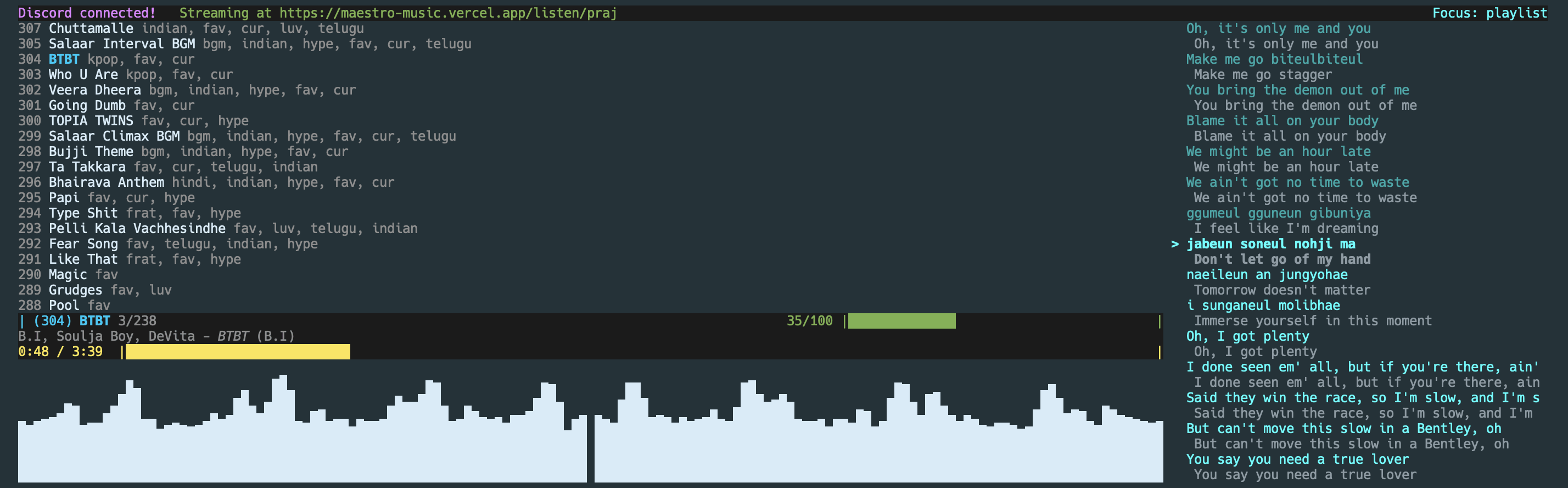
A command-line tool for playing audio. Supports songs from YouTube, YouTube Music, and Spotify, with features for lyrics, clipping, filtering by tags, statistics, audio visualization, and music discovery.
Dumps repository files into a single file for use in RAG and LLM applications. Supports entire repositories, respects .gitignore, and allows filtering by file type.
A service-oriented platform for authoring and delivering online learning at any scale. Provides content management and learning management services. (7.3K stars)
Built on Python, agnostic to models, APIs, data sources, and databases. Visual IDE with drag-and-drop support. Multi-agent orchestration and conversation management. Integrates with LangSmith, LangFuse, and LangWatch for observability. (28.3K stars)
Simplifies web crawling and data extraction for use with large language models and AI applications. Supports crawling multiple URLs simultaneously, extracting all internal and external links, executing custom JavaScript before crawling, and CSS selectors. (2.7K stars)
A SQLite command-line client developed in Python, supporting regular database operations, command auto-completion, and syntax highlighting. (2.5K stars)
Provides a secure way to handle XML files by modifying XML parsers in the standard library to remove features that could lead to security vulnerabilities.
Provides a drop-in replacement for Spark SQL and Spark DataFrame APIs in single-process setups.
When interruptions or crashes occur, it automatically recovers from the last completed step, achieving durable execution. Uses PostgreSQL to save execution state and OpenTelemetry to track workflows.