During the National Day holiday, Python 3.13 final version was released! The official blog outlines the key new features as well as removed/deprecated content. (Also check out the most detailed and authoritative official documentation: What's New in Python 3.13?)
TL;DR
Python 3.13.0 lands with free-threading as the star, Python NZ reels from its treasurer's embezzlement, and open-notebooklm turns any PDF into a podcast.
🦄
Articles & Tutorials
× 14What makes Python 3.13 stand out? What are the most noteworthy changes we should pay attention to? This article highlights the two major features: free threading and JIT, explaining what they are, their impact, and how to use them.
The author says Python 3.13 is the most exciting version since Python 3.6 introduced f-strings. The article shares his three favorite features: the new REPL, Git-friendly virtual environments, and two PDB improvements.
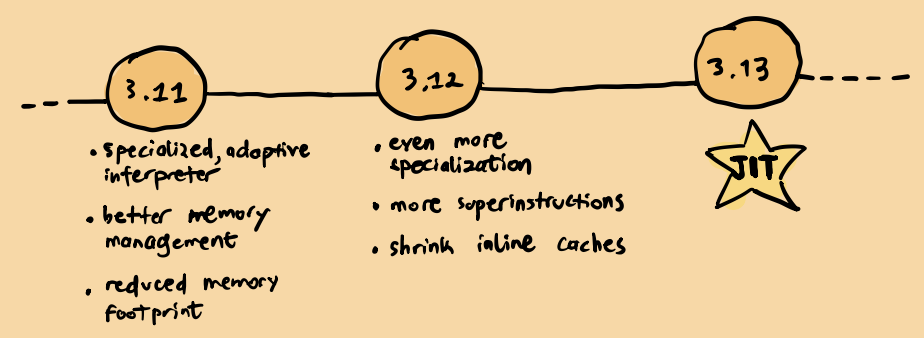
Since version 3.11, Python has seen significant performance improvements. The author analyzes several key factors behind this success and explains key technologies (specialized adaptive interpreter, better memory management, JIT).
What can you build after learning Django? This article compiles nearly 30 Django project ideas with their required tech stacks, featuring sections for both beginners and advanced engineers.
When should you catch exceptions thrown by functions, and when shouldn't you? How do you know which exceptions to catch? After catching an exception, how exactly should you handle it? Why shouldn't you catch all exceptions, and when is it okay to do so? What are the best practices for error handling?
A newly created PEP proposing to allow exception handling syntax to support except and except* expressions without parentheses. The goal is to simplify syntax, maintain consistency with other parts of the language, and improve readability.
Before Python 3.13, due to the GIL, Asyncio was mainly used for IO-intensive tasks. With 3.13's support for free threading, asyncio.to_thread() now has a place for CPU-intensive tasks too. This article covers its usage and performance improvements.
This tutorial covers how to use Streamlit to load and visualize data, run data based on prompts, use PropelAuth for authentication, and save user prompts.
This article explains how to develop a basic image search engine using pre-trained models to generate embeddings for images and text, store them in Postgres, and use pgvector for similarity search on these embeddings.
Dictionaries are commonly used data structures, but don't overuse them! The article points out the opacity and mutability maintenance issues with dictionaries, and introduces alternatives like classes, dataclasses, Pydantic, and TypedDict to improve code clarity, maintainability, and safety.
TypedDict was introduced in Python 3.8's PEP-589, primarily to provide type annotations for dictionaries. The article covers scenarios where it's particularly useful, including partial usage, as **kwargs, dependency passing, and more.
The author shares his old virtualenvwrapper workflow and his recent switch to direnv, Starship, and uv, including related configurations and usage experiences.
14 Carlos Cordero, treasurer of Python NZ, stole money from the high-profile society over several years, putting it at risk of liquidation interest.co.nz
Python New Zealand is a volunteer-run non-profit organization whose treasurer embezzled $70,000 over nearly 5 years, leaving only $26 in the account! The article details the investigation findings. (Also: Django Software Foundation treasurer's thoughts on the treasurer role in tech non-profits)
🐿️
Projects & Resources
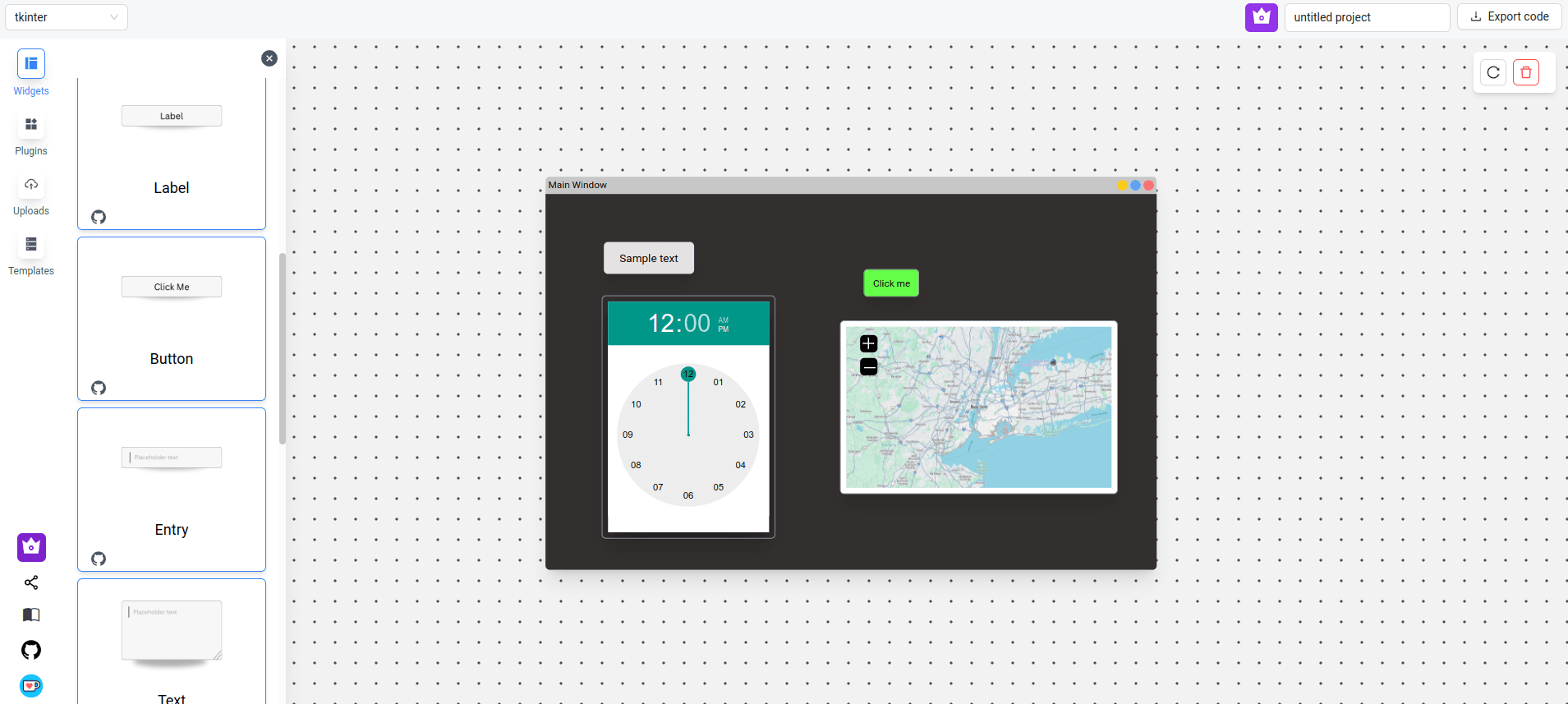
× 12 01 PaulleDemon/PyUIBuilder: The webflow for Python GUI. GUI builder for Tkinter, CustomTkinter, Kivy github.com
Easily create Python GUI applications through drag-and-drop. Supports multiple frameworks, provides pre-built UI widgets, supports extending third-party UI libraries, layout managers, and uploading local assets.
02 AI-Youtube-Shorts-Generator: A python tool that uses GPT-4, FFmpeg, and OpenCV to automatically analyze videos github.com
Uses GPT-4 and Whisper to extract highlights from YouTube videos and edit them into engaging short clips, with vertical cropping support for short video platform styles.
Enables stream-like operations on iterables with lazy evaluation during operations and concurrency support.
04 gptme: Your agent in your terminal, equipped with local tools: writes code, uses the terminal, browses the web, vision github.com
A personal AI assistant in your terminal that executes code, reads/writes files, browses the web, and views images. (1.9K stars)
Uses open-source LLM and TTS models to generate natural conversation-style podcast episodes from PDF content, outputting MP3 files. Features a simple Gradio interface for easy interaction. (1.1K stars)
Based on Pyscript, lets you develop reactive frontend applications using only Python.
07 secure: Lightweight modern Python library to add security headers (CSP, HSTS, etc.) to Django, Flask, FastAPI, and more. github.com
Adds security headers (like Strict-Transport-Security, X-Frame-Options, etc.) to mainstream web frameworks, preventing the impact of common security vulnerabilities.
A universal billiards simulator developed in Python with an interactive 3D interface, focusing on speed, flexibility, visualization, and analytical convenience.

Content collaboration management software developed in Python. Tech stack: Flask, halfmoon CSS framework, CodeMirror as editor. Features a minimalist interface, dark mode support, Markdown, authentication, page history, page attachments, and more.
Unlike other pure Python HTTP clients (like httpx and requests), curl_cffi can mimic browser TLS/JA3 and HTTP/2 fingerprints, with websocket support. (2.2K stars)
Uses vision-language models to extract structured data from various data sources, compatible with LLMs, vector databases, and RAG frameworks. (1.1K stars)
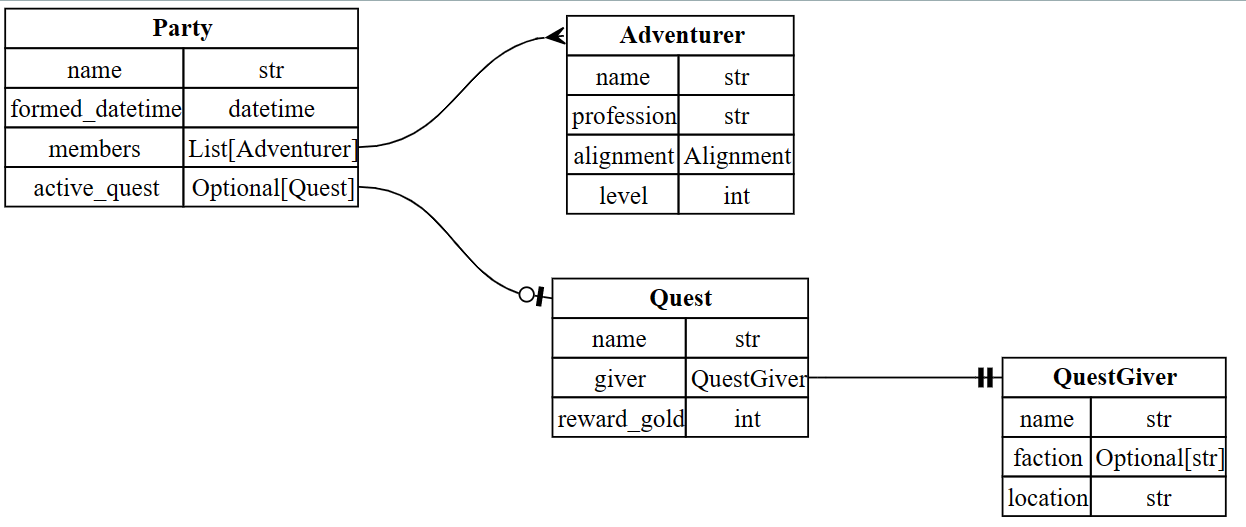
Creates entity relationship diagrams (ERD) for Python data model classes (Pydantic, attrs, dataclass), with charts rendered using Graphviz.
🐢
Podcasts & Videos
× 4This video covers the exciting new features in Python 3.13 and reveals the latest development plans for Python 3.14.
A FreeCodeCamp video tutorial showing how to develop full-stack projects using the FARM tech stack (FastAPI, React, and MongoDB).
Over 40 Python core developers spent a week wrapping up Python 3.13 and planning, prototyping, and implementing features for Python 3.14. The podcast also features interviews with some developers.
Domestic Python core developer Gao Tian discusses several new features in 3.13, as well as his implementation of PEP-667 and several PDB features.