The author attempts to implement classic small programming languages in about 50 lines of Python code each, including Assembly (one of the oldest programming languages), 1970s BASIC, Forth/MOUSE, Lisp 1.5, APL/K, PL/0, and more. The series of articles introduces the implementation process and main principles.
TL;DR
A BASIC interpreter in 50 lines of Python, GitHub's Octoverse crowning Python the platform's most popular language, and Django Girls celebrating its tenth birthday.
🦄
Articles & Tutorials
× 11The Django Girls organization started in 2014 and is now celebrating its 10th birthday! Over the past decade, 2,467 volunteers from 109 countries/regions have organized 1,137 free workshops, with over 24,500 women from 593 cities participating in these events.
venvstacks is a venv-based project that divides Python virtual environments into three layers (runtime layer, framework layer, application layer), with each layer independently archived and released. It's suitable for complex projects or situations where dependencies need to be shared between different components. (See also: The Origin of venvstacks)
The article recommends avoiding named tuples as return values in APIs because they support both index-based and attribute-based data access, adding unnecessary complexity. The recommended approach is to use clearer data structures like data classes or typed dictionaries.
Django will turn 20 next year, and the author reflects on various topics about Django, including why it has remained healthy and long-lived, the evolution of the core team, Django's key pillars, challenges in adding new features, major upcoming features, and Django's relationship with its ecosystem.
How to use the free-threading feature introduced in Python 3.13, and what impact does it have on Python application performance? The article compares the performance of different concurrency models through multi-threaded and multi-process implementations of the PageRank algorithm.
07 A Comprehensive Guide to Python Project Management and Packaging: Concepts Illustrated with uv – Part I reinforcedknowledge.com
A comprehensive guide to Python project management and packaging, demonstrated using the currently popular tool uv, covering topics like using pyproject.toml, entry points, the differences between modules, packages, projects, and libraries, dependencies, dependency groups, dependency object identifiers, locking and synchronization, and more.
Introduces how to use cProfile from the standard library to analyze code performance and generate flame graphs for visualization using snakeviz. Explains how to read and understand flame graphs, identify performance bottlenecks through them, and demonstrates performance optimization workflows with examples.
How to improve Python programming efficiency and productivity? This lengthy article shares 21 Python programming tips and tricks, mostly beginner-level content but with comprehensive examples and explanations.
The author's reflections from the 2024 Machine Learning Conference on ML systems development, scaling, execution and collaboration, user relationships, conference activities, and more.
GitHub released this year's Octoverse report, revealing the current state and trends of the global developer community. Driven by the AI boom and machine learning, Python has finally surpassed JavaScript to claim the top spot. (India is projected to become the largest developer community on GitHub by 2028.)
🐿️
Projects & Resources
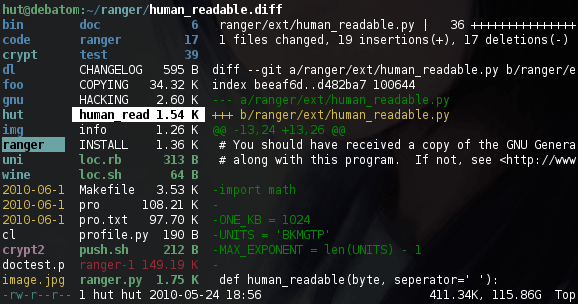
× 12A minimalist file manager in the console that supports directory hierarchy, multi-pane view modes, common file operations, batch renaming, automatic file type detection and execution with appropriate programs, tabs, bookmarks, mouse operations, and more. (15.6K stars)
Composites foreground images into background images realistically, eliminating inconsistencies between them, enabling image blending, coordinated drawing, shadow generation, and more. Aims to solve all problems related to image composition.
Supports calling Python from Go (basic types, modules, functions) and calling Go from Python (exporting Go functions/structs to Python), with basic testing using common libraries (matplotlib, gradio).
A GitHub Action that automatically updates code snippets in specified sections of Markdown files without manual intervention.
Contains a series of subcommands that extend Git functionality, making your Git workflow smoother.
Implements programming languages like Assembly, BASIC, Lisp, MOUSE, TCL, k/simple interpreter, and PL/0 interpreter in less than 50 lines of Python code each.
Applied to real-time communication scenarios like phone calls, video conferences, and voice chats. (1.2K stars)
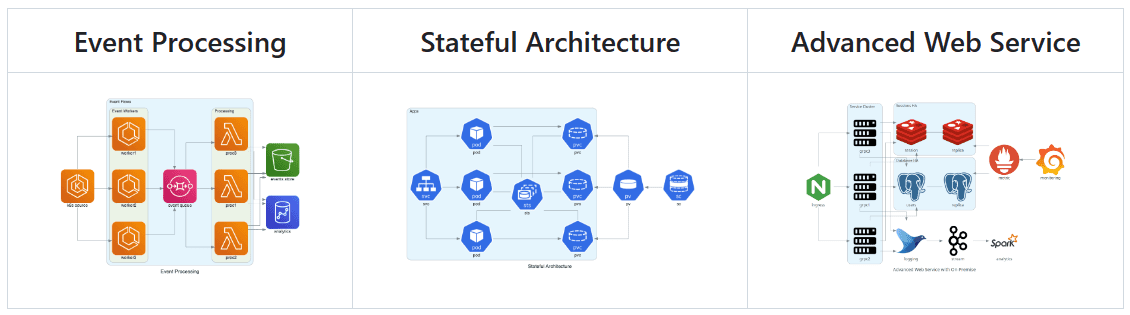
Draw cloud system architectures with Python code, enabling prototyping without other design tools. Supports cloud providers like AWS, Azure, GCP, Kubernetes, Alibaba Cloud, Oracle Cloud, and more. (39K stars)
A lightweight, Markdown-based note-taking application with task management features. Converts Markdown files into modern web interfaces, supporting tasks, images, and code snippets.
Reads popular document formats (PDF, DOCX, PPTX, images, HTML, AsciiDoc, Markdown) and exports them as Markdown and JSON. Supports scanned PDFs and PDF document understanding, including page layout, reading order, and tables. (7.3K stars)
A free and open-source machine translation API, fully self-hosted and supporting offline usage. The translation engine is the open-source Argos Translate library, with no dependency on proprietary providers like Google or Azure. (9.6K stars)
A tool for creating and executing data processing pipelines, suitable for complex document processing tasks. It provides a low-code, declarative YAML interface for defining LLM-powered complex data operations. (1.2K stars)