Explores the future of Python in browsers, introducing high-performance Python programming implemented by SPy. SPy, as an emerging "Python-like" language, achieves efficient code compilation and execution by dividing code into "blue code" executed at compile time and "red code" executed at runtime.
TL;DR
This issue dreams big about Python in the browser, weighing CPython, Pyodide, and SPy; FastAPI gets dissected to its bones, and the minimalist agent framework PocketFlow steals some of the spotlight.
🦄
Articles & Tutorials
× 12A week-long collaboration/adventure experience between the SPy author and two other community leaders, sharing several problems they solved together, SPy's basic concepts and design decisions, and building a simple SPy playground. Particularly emphasizes the value of interpersonal relationships and the joy of spending time together.
Provides an in-depth analysis of FastAPI's architecture and core components, explaining how FastAPI works collaboratively through the ASGI protocol, Uvicorn server, Starlette framework, and Pydantic data validation library, showcasing features like dependency injection and automatic documentation generation.
Flask-SQLAlchemy enables seamless integration of SQLAlchemy with Flask. The article provides detailed coverage of its key features and demonstrates how to easily manage databases with Flask-SQLAlchemy through practical projects.
How to efficiently use and store text embedding vectors? The article proposes a solution using Parquet file format and Polars library, enabling fast loading of embedding vectors and similarity calculations while supporting dynamic filtering and metadata management.
What value do Python's type hints provide? Besides adding code complexity, can they bring enough benefits? The article demonstrates the advantages of type hints from multiple perspectives, introduces techniques for effectively using type hints, and shows how to enhance development experience with modern tools.
The Python ecosystem has quite a few GUI libraries - which one is best suited for your project? The article compares multiple mainstream GUI libraries (Tkinter, PyQt, PySide, Kivy, PySimpleGUI, WxPython, PyGObject, Remi, etc.), introducing their relative advantages and licensing restrictions, and creates simple "Hello World" projects with each library.
Notebook Intelligence is an AI coding assistant and extensible AI framework that combines JupyterLab with AI. The article introduces how to define multiple tools (such as geographic coordinate queries, map generation, notebook creation and sharing) to build an AI agent.
The article introduces how to run local large models on macOS, utilizing the llm-mlx plugin and Apple's MLX framework, demonstrating plugin installation, model downloading, and text generation with large models, along with model optimization and caching techniques.
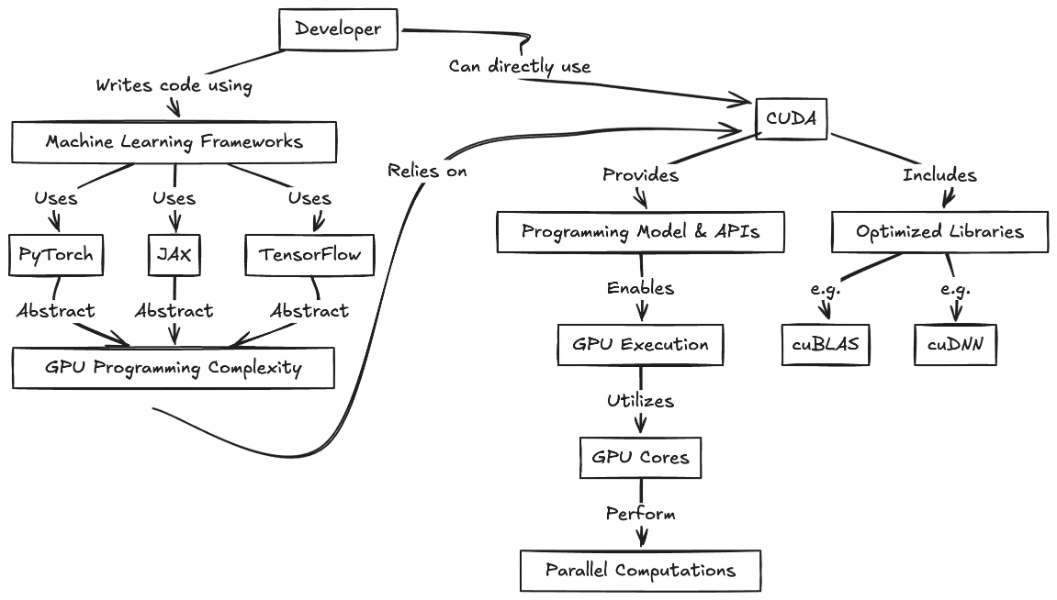
CUDA is a platform and C++ extension for writing programs that run on GPUs. The article explores how CUDA kernels work and how they map computations to GPU hardware.
How do you design an API with excellent user experience? The article proposes several fundamental principles and demonstrates how to optimize user experience through naming conventions, providing symmetric methods, default values, reducing repetition, and leveraging language features, using a publish/subscribe service API design as an example.
How do you choose and balance between pursuing code perfection and rapid delivery? Through personal experience and analysis of Flickr's Flamework framework, the author reveals that sometimes rapid iteration and solving real problems are often more important than code elegance.
🐿️
Projects & Resources
× 12A weekend project that supports translating the author's invented "wend" programming language into GNU assembly.
100% compatible rendering output, error reporting as useful as Django's errors, with performance superior to pure Python implementations.
Converts time from one location to other places/timezones, can also display current moon phases, show full moon dates, and calculate past or future times.
A command-line tool for sharing files between devices via Wi-Fi, unique in its compatibility with Apple AirDrop, supporting file sharing with Apple devices running iOS and macOS. (8.9K stars)
Uses FastAPI as backend and Streamlit as frontend, supports converting images (JPG, PNG) to PDF and vice versa, also supports combining multiple images and PDFs into a single PDF.
Write code that transforms code. Combines Tree-sitter's parsing capabilities with rustworkx's graph algorithms to achieve scriptable, large-scale, multi-language code manipulation.
07 mindmap-generator: Turn any input document into a sophisticated, context-dependent mindmap github.com
Utilizes large models to extract core concepts, relationships, and details from different types of documents and organize them into intuitive, hierarchical mind maps.
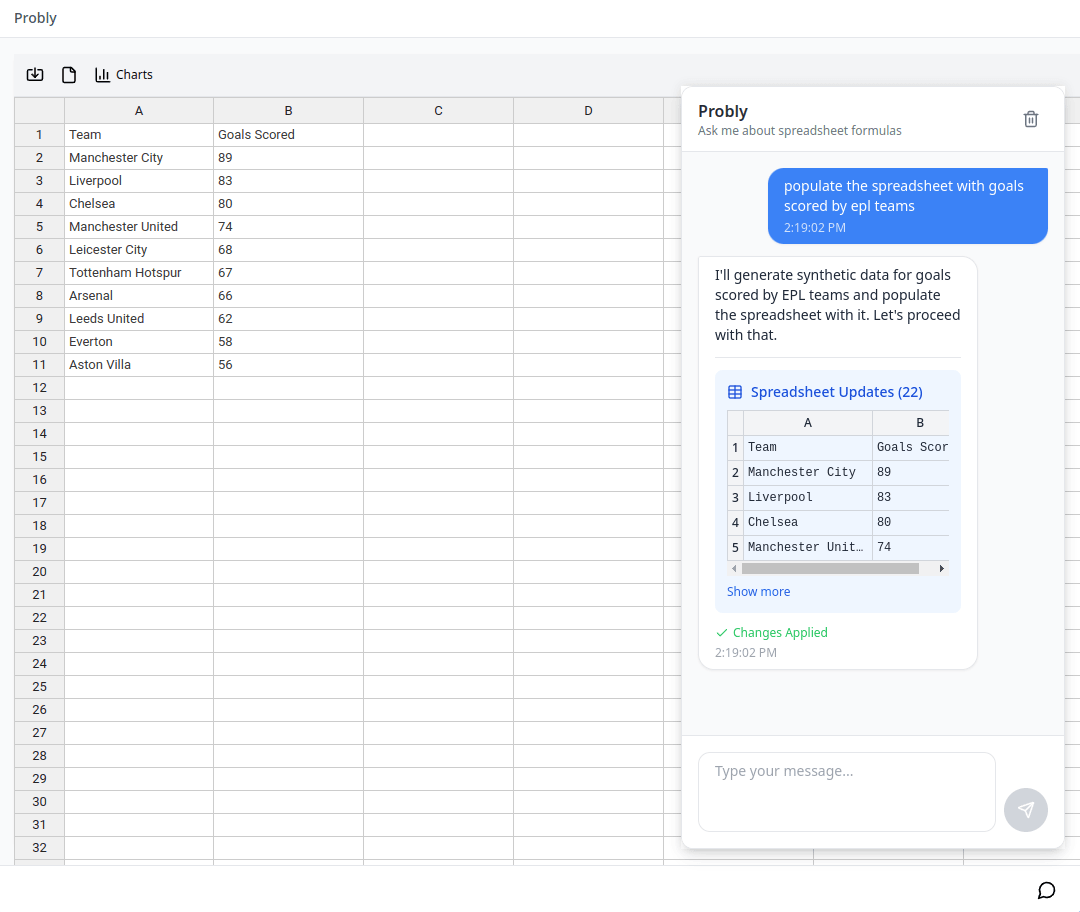
An AI application that combines spreadsheet functionality with Python data analysis capabilities, supporting formulas, running Python code in browsers, data visualization, AI smart suggestions, and automated analysis.
Open source GPU cluster manager with broad compatibility across various hardware and models, easy scaling of GPUs or nodes, distributed inference, multiple inference backends, user and API key management, GPU performance and utilization monitoring, token usage and rate analysis. (1.8K stars)
A minimalist LLM framework implemented in 100 lines of code, supporting multi-agents, workflows, and RAG.
11 smolagents: a barebones library for agents. Agents write python code to call tools and orchestrate other agents. github.com
Open sourced by Hugging Face, run powerful agents with just a few lines of code, supports any LLM, supports text, visual, and even audio input. (12.8K stars)
AI agents outperform traditional LLMs - this is an awesome list of AI agent resources.