Many Java/C++ design patterns just don't vibe with Python's philosophy. The author compares traditional implementations of Singleton and Builder patterns with their Pythonic alternatives, showing how to leverage Python's module system, closures, and default parameters to write cleaner, more elegant code while dodging unnecessary complexity and potential pitfalls.
TL;DR
GIL-free, free-threaded Python wins official approval at the Language Summit — the news of the week; MiniMax-M1 debuts as the first open hybrid-attention reasoning model, and KV caches get coded from scratch.
🦄
Articles & Tutorials
× 12The annual gathering of Python core developers, diving deep into the game-changing free-threading revolution. The summit covered cutting-edge topics like concurrency race handling, fearless concurrency, and governance challenges, with special focus on multi-threading performance optimization and language evolution strategies.
Core developer Matt Page presented the latest updates on free-threaded Python at the Language Summit, evaluating PEP 703's implementation across four key dimensions: performance, stability, maintainability, and adoption. Single-threaded performance overhead has dropped from 40% to under 10%, and the architectural design has proven its worth.
A practical guide written by an author who switched from teaching R to Python, helping R users get up to speed quickly by contrasting the design philosophies and syntax differences between the two languages. It covers environment setup, data processing library choices, and the mental shift from functional to object-oriented programming.
A deep dive into how the Python virtual machine handles global variables, revealing the fundamental differences between global and local variables through bytecode analysis. The VM performs dynamic name resolution for globals rather than index-based access, and this extra layer of indirection is what makes Python's dynamic features possible.
Before Python 3.6, dictionaries were unordered. Starting with 3.6, they began preserving insertion order, but only as an implementation detail. From 3.7 onwards, insertion order became part of the official language spec. However, dictionary ordering doesn't affect equality comparisons—unlike sequences such as lists, dictionaries are fundamentally about key-value mapping.
KV cache dramatically speeds up LLM inference by storing and reusing previously computed key-value vectors, eliminating redundant calculations. The article breaks down the redundant computation problem in attention mechanisms and provides complete Python code for implementing KV cache from scratch.
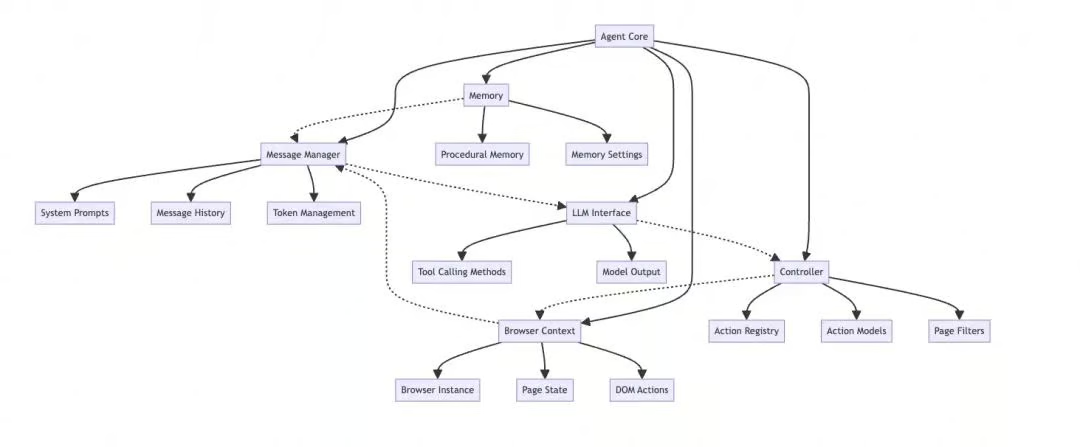
Using the open-source browser-use project as a case study, this article dives deep into LLM Agent implementation principles and engineering practices. It dissects browser-use's architecture, including Agent Core, MessageManager, Memory, LLM Interface, Controller, and BrowserContext components and their interaction flows.
A PEP draft proposing deep immutability mechanisms through a freeze() function that recursively freezes objects and all their referenced objects. This proposal tackles data integrity protection and thread-safe sharing issues, providing robust support for functional programming and concurrency optimization.
An introduction to using Signals for state management in Python, which solves dependency coordination issues in traditional state management through reactive programming. When state changes, it automatically triggers related updates without manual maintenance. This reactive mechanism prevents the common "forgot to update X when Y changed" problem.
11 Create your customized running plan: A step-by-step guide using Python, Elasticsearch, and Agno allthingsopen.org
Learn how to build an AI running coach by parsing Apple Health XML data into Elasticsearch, then using the Agno framework to generate personalized four-week training plans. Finally, convert the Markdown-formatted plans into Notion pages for a complete data-driven fitness solution.
The article explores 11 different methods for detecting vowels in strings, with benchmarking and bytecode analysis revealing that regex performs best on long strings. It exposes how Python interpreter overhead significantly impacts performance and showcases CPython's regex engine optimization tricks using bitmap lookups.
🐿️
Projects & Resources
× 12 01 MiniMax-M1: the world's first open-weight, large-scale hybrid-attention reasoning model github.com
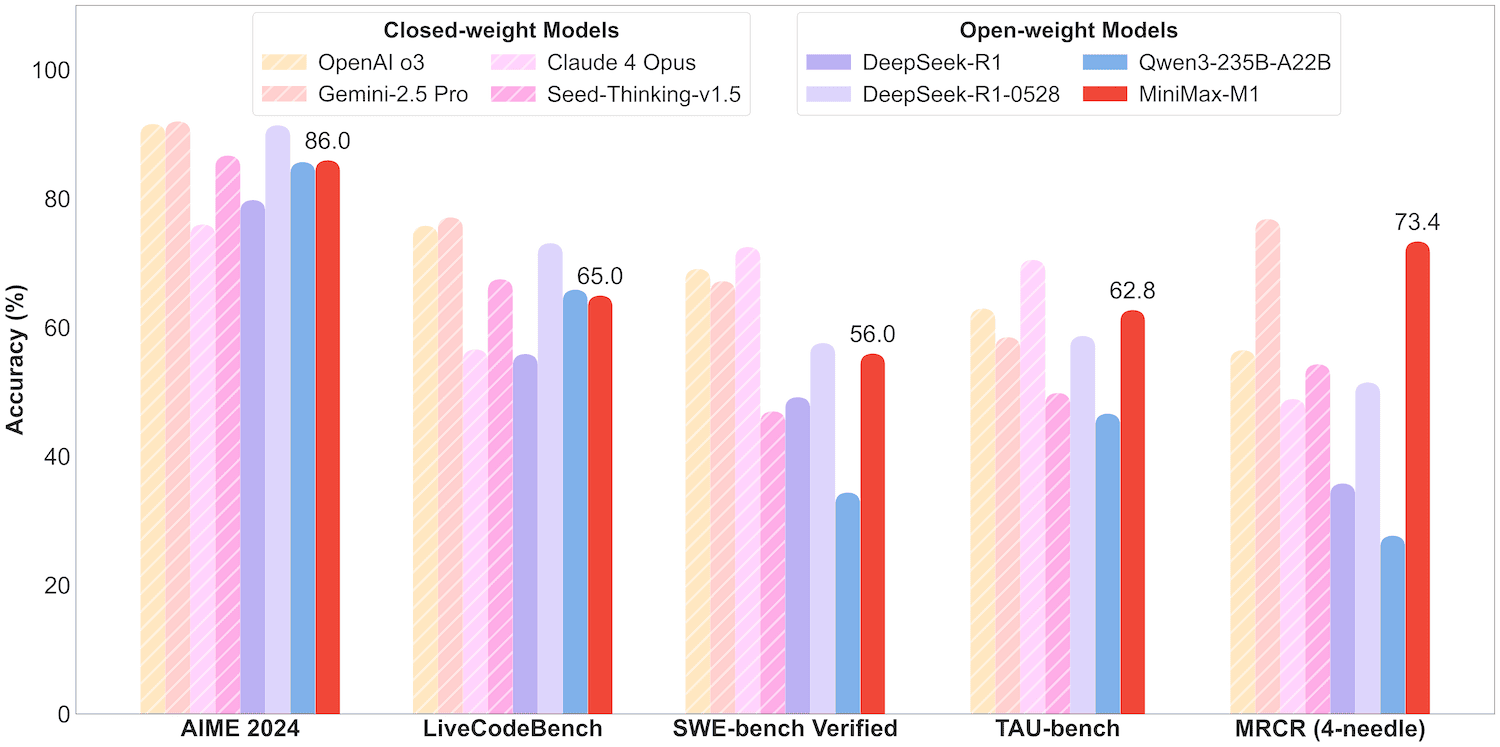
The world's first open-source large-scale hybrid attention reasoning model, featuring a mixture-of-experts architecture combined with lightning attention mechanisms. With 456 billion parameters and 45.9 billion activated per token, it natively supports 1 million token context length—8x that of DeepSeek R1. (1.8K stars)
A lightweight library providing functional programming tools for Python, packed with utility functions for iterators, functions, and dictionary operations. (4.9K stars)
03 TurboDRF: The dead simple Django REST Framework API generator with role-based permissions github.com
A dead simple Django REST Framework API generator—just add one mixin and method to your models to automatically generate complete REST APIs. Features role-based permissions, smart pagination, advanced filtering, full-text search, multi-field sorting, and more, all with zero boilerplate code.
04 WinUp: A ridiculously Pythonic and powerful framework for building beautiful desktop applications github.com
A modern Python desktop UI framework built on PySide6 with a declarative API. Features component-based architecture, reactive state management, hot reload development, built-in routing system, and more—making desktop app development simple and efficient.
A modern Python web framework built on FastAPI with MVC architecture design. Integrates SQLModel for type-safe database operations, includes interactive CLI tools for rapid component generation, and supports Jinja2 templates, CSRF protection, hot reload, and more.
A pure PyTorch reimplementation of Stable Diffusion 3.5 designed for educational and experimental purposes. Implements all components from VAE to DiT in just ~2,800 lines of code, including multimodal diffusion transformers, flow matching schedulers, joint attention mechanisms, and other core features.
07 pyleak: Detect leaked asyncio tasks, threads, and event loop blocking with stack trace in Python github.com
A Python resource leak detection tool inspired by Go's goleak. Detects leaked asyncio tasks, threads, and event loop blocking, providing detailed stack trace information.
Inspired by R's Shiny, this framework enables rapid creation of interactive visualizations and prototype applications. Unlike other data science frameworks, Shiny doesn't limit app growth and has the scalability to support large, mission-critical applications. (1.5K stars)
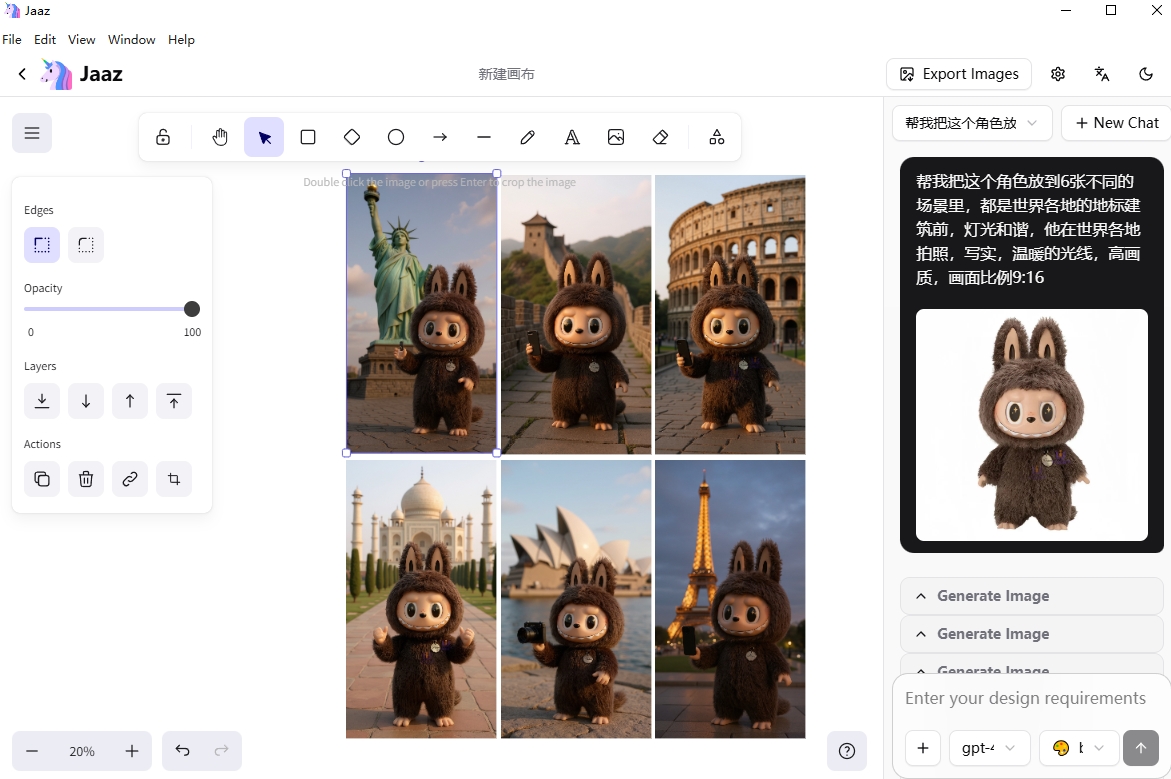
A free local AI design agent tool serving as an alternative to Lovart. Features conversational image editing, infinite canvas creation, storyboard making, and supports multiple AI models including GPT-4O, Flux, Google Imagen, and more.
A proxy server specifically designed to bypass Cloudflare and DDoS-GUARD protection. Uses Selenium and undetected-chromedriver to create browser instances that automatically solve Cloudflare challenges. (9.9K stars)
An open-source intelligent agent framework designed to simplify and enhance multi-domain workflows. Provides CLI interface and WebSocket server support for modern React frontends, integrating multiple LLM providers including Anthropic Claude, Google Gemini, and more. (2.5K stars)
This project aims to promote universal education and eliminate educational poverty between regions. It hopes overseas Chinese can help their children continue learning about domestic education. (40.3K stars)
🐢
Podcasts & Videos
× 2@Gao Tian presents PEP-667 implementation at PyCon, which semantically distinguishes and organizes locals() and frame.f_locals, reducing many weird behaviors and making their functionality easier to understand while more powerful.
Learn how to integrate Python with desktop environments, including task scheduling, message notifications, and developing desktop application scripts.
🥂
Discussions & Questions
× 2The Steering Committee approved PEP-779, which removes the "experimental" label from free-threaded builds in Python 3.14. This means free-threaded Python officially becomes a supported version.