Flask creator Armin Ronacher shares his experience building an XML parsing library with AI. He had Claude write a fault-tolerant XML parser from scratch to handle malformed XML content generated by LLMs. The result? 1,100 lines of parser code, 1,000 lines of tests, complete CI setup, and PyPI publishing—all accomplished in just 30-45 minutes.
TL;DR
Will AI replace junior developers? Guido and other PyCon voices weigh in; gemini-cli brings Gemini to the terminal, while BitNet's 1-bit inference framework and the nxtscape agentic browser compete for attention.
🦄
Articles & Tutorials
× 12Discover how to create self-contained Python scripts using uv and PEP 723 inline script metadata. By embedding dependency and Python version info directly in your scripts, uv can automatically create virtual environments and install dependencies, making Python scripts as executable as Go programs.
The author interviewed Python community leaders at PyCon US, including Guido van Rossum and Anthony Sottile. The consensus? AI won't replace developers but will change how we work. They emphasized that understanding code matters more than relying on AI generation, with AI being best suited for boilerplate and repetitive tasks.
Learn how to use descriptors as an alternative to @property decorators, solving type checking errors when property setters accept flexible types, enabling more natural property value assignment.
Explore Python's new ability to call Mojo code. In prime number calculation tests, the Mojo version ran 40x faster than pure Python and 23x faster than NumPy, showcasing Mojo's impressive performance advantages.
The author open-sourced inline-snapshot-django, a package specifically designed for SQL query snapshot testing in Django projects. This tool automatically captures and compares SQL query fingerprints through context managers, providing more detailed debugging info and automated snapshot management compared to Django's native methods.
Django 5.1 introduces native database connection pooling, reusing PostgreSQL connections instead of complex new connection creation methods. This reduces database connection overhead by 60-80% and improves response times by 10-30%. The article covers configuration steps, connection pool parameters, and performance monitoring.
Using Python simulations and probability theory, the author reveals the waiting time paradox: when buses arrive every 10 minutes on average, passengers also wait 10 minutes on average, not 5. The article explains this phenomenon using Poisson processes and exponential distributions, then validates theoretical predictions with real Seattle bus data—though real-world patterns still differ from theory.
An interactive tutorial written in Jupyter Notebooks, focusing on the principles and implementation of Kalman and Bayesian filters. These algorithms are widely used in aerospace, robotics, and finance. Starting from sensor noise problems, the author provides accessible explanations through Python code and visualizations.
The author shares their migration experience from virtualenvwrapper to modern Python environment management tools. By configuring direnv for automatic virtual environment activation in project directories, using venv and workon commands to simplify virtual environment creation and project switching, and customizing clean command-line prompts with Starship.
The LangChain team provides deep analysis of agent framework design philosophy, identifying that the core challenge in building reliable agent systems is ensuring LLMs have appropriate context at each step. The article distinguishes between Workflow (predefined code paths) and Agent (LLM dynamic control) modes, emphasizing that most production agent systems combine both approaches, and compares design philosophies across 100+ agent frameworks.
The author summarizes lessons learned over the past 9 years, analyzing 12 key issues across coding, testing, and debugging dimensions. Topics include null handling, date logic, data format upgrades, and forgetting to push changes. The piece emphasizes the importance of good logging, colleague discussions, and reproducing issues with minimal cases.
🐿️
Projects & Resources
× 12 01 gemini-cli: An open-source AI agent that brings the power of Gemini directly into your terminal github.com
Google's open-source command-line AI workflow tool that can query and edit large codebases with support for over 1 million token context windows. It can generate new applications from PDFs or sketches, automate operational tasks like querying PRs or handling complex code merges, and connect to various tools and media generation capabilities through MCP servers. (33.8K stars)
An open-source AI agent browser with privacy-first design, serving as an alternative to Arc, Dia, and Perplexity Comet. You can use your own API keys or run local models through Ollama. (1K stars)
A data generation tool designed specifically for creating domain expert AI. Upload documents and generate fully trained custom LLMs with one click. Supports offline operation without external API keys, enabling AI to learn domain-specific knowledge and become subject matter experts. (1.6K stars)
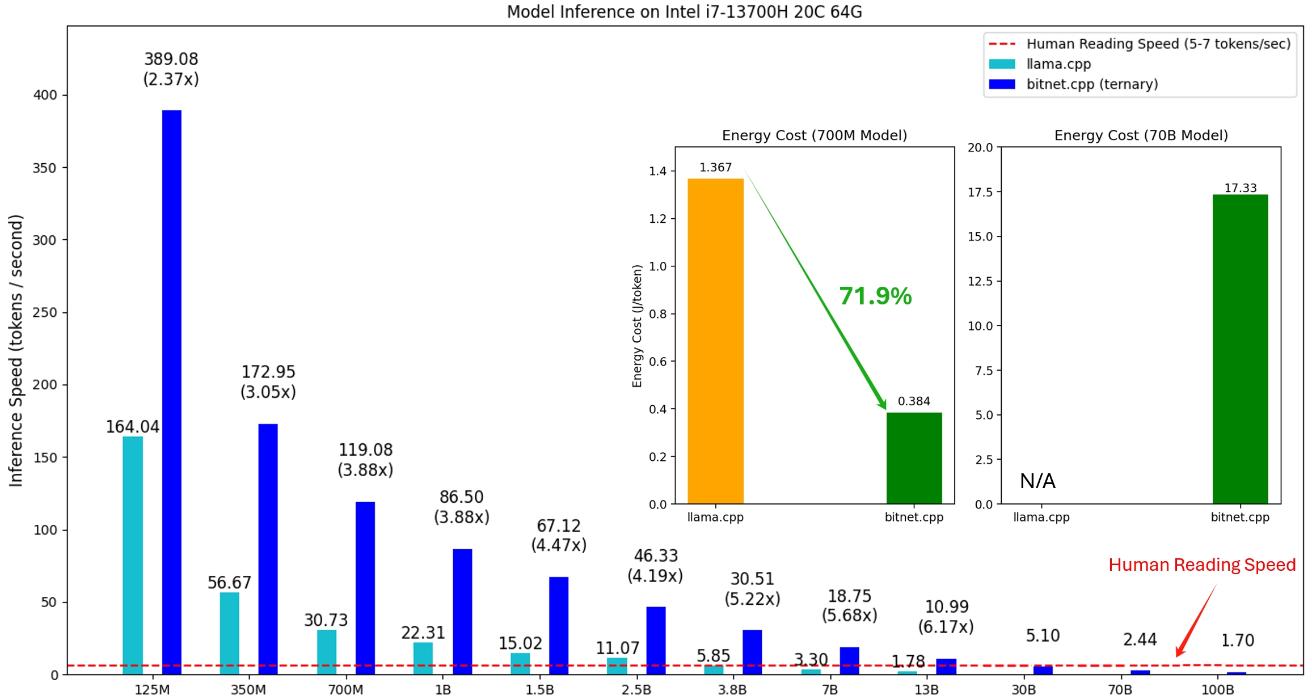
Microsoft's open-source official inference framework for 1-bit large models, supporting fast lossless inference for models like BitNet b1.58. Achieves 1.37x to 5.07x speedup on ARM CPUs with 55.4% to 70.0% energy reduction, and 2.37x to 6.17x speedup on x86 CPUs with 71.9% to 82.2% energy reduction. Can run 100B parameter BitNet models on a single CPU at human reading speed. (20.3K stars)
An AI-powered research assistant that transforms complex questions into comprehensive cited reports, spanning diverse knowledge sources including academic databases, scientific repositories, web content, and private document collections. Features privacy-first design, flexible configuration, comprehensive analysis, and transparent citations with multiple research modes and advanced features. (3K stars)
A tool for packaging Python projects into executables, built on cosmopolitan and uv. Offers three packaging modes: Bundle mode includes Python and all dependencies, Online mode generates compact cross-platform packages, and Portable mode creates standalone cross-platform executables. Supports macOS, Linux, and Windows platforms.
Write notebooks using lightweight markup and automatically generate high-quality documentation, tests, continuous integration, and packaging. Supports automatic documentation generation hosted on GitHub Pages, publishing to PyPI and conda, bidirectional sync between notebooks and source code, and Git-friendly notebook processing. (5.1K stars)
08 fastapi_mcp: Expose your FastAPI endpoints as Model Context Protocol (MCP) tools, with Auth! github.com
A library for exposing FastAPI endpoints as MCP tools with built-in authentication. Supports zero or minimal configuration, flexible deployment, direct communication with FastAPI apps using ASGI transport, and provides native dependency injection with unified infrastructure. (5.6K stars)
A collection of machine learning notes and code covering core topics like RLHF system development, SGLang learning, scheduling and routing, and distributed training. Includes in-depth source code analysis, practical experience sharing, and development guides—a quality resource for learning ML + SYS. (2.7K stars)
10 machine-learning-visualized: ML algorithms implemented and derived from first-principles in Jupyter Notebooks and NumPy github.com
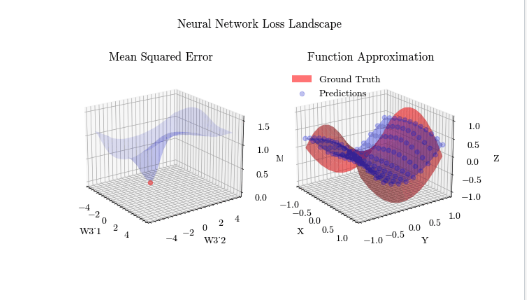
Visual tutorials implementing and deriving machine learning algorithms from first principles using Jupyter Notebooks. Each algorithm includes complete mathematical derivations and training process visualizations, covering neural networks, logistic regression, perceptrons, PCA, K-means clustering, and gradient descent. Also provides Marimo-based interactive notebooks to observe how weights affect loss functions.
A graph-based multi-language codebase retrieval-augmented generation system that uses Tree-sitter to parse code and build knowledge graphs. Enables natural language queries of codebase structure and relationships.
A lightweight RSS reader that redefines the RSS reading experience with AI, supporting multi-source RSS aggregation, AI summary generation, scheduled update mechanisms, categorized browsing, and theme switching. Easily deployable to GitHub Pages or locally with Docker.
🐢
Podcasts & Videos
× 2A curated list of high-quality talk videos from DjangoCon Europe 2025.
The author shares their library "dowhen" in development, which conveniently allows inserting callbacks before specific lines of code execute, helping with debugging or monkey-patching code you can't easily modify.