Python 3.14's new sys.remote_exec() function lets you inject code into a running process without a restart or source code changes. You can perform remote debugging with the python -m pdb -p pid command to check status, get stack traces, and even start an interactive session at runtime. This standardized injection mechanism significantly lowers the bar for developing debugging tools.
TL;DR
Can virtual threads replace async/await? A manifesto that kicked off big debate, plus CPython 3.14's remote debugging unveiled, an architecture face-off of DeepSeek-V3 vs Kimi K2, and a PyPI phishing incident as a warning.
🦄
Articles & Tutorials
× 12This article reveals Python's potential as an offensive security tool in a Windows environment. It shows how to easily deploy Python via the Microsoft Store or offline and use the ctypes library to call Win32 APIs directly for low-level system operations.
Armin Ronacher explores the future of concurrent programming in Python, proposing virtual threads as a replacement for async/await! He envisions a world with structured concurrency and a cleaner API that eliminates the 'function color' problem, handing the complexity of concurrency back to the interpreter. This would allow developers to write concurrent code in a simpler, more intuitive way.
How is the CPython JIT compiler being developed? This article breaks down the process, explaining how techniques like tracing and a 'copy-and-patch' mechanism are used to compile only the most frequently executed code paths. It also covers how the JIT handles tricky issues like memory management, debugging, and performance analysis.
Ever been burned by asyncio? The author sharply points out its three major design flaws: a messy cancellation mechanism, weakly-referenced tasks, and callback-style I/O, which can easily lead to deadlocks or tasks that mysteriously disappear. Looking for a more elegant concurrency solution? The author recommends Trio/AnyIO.
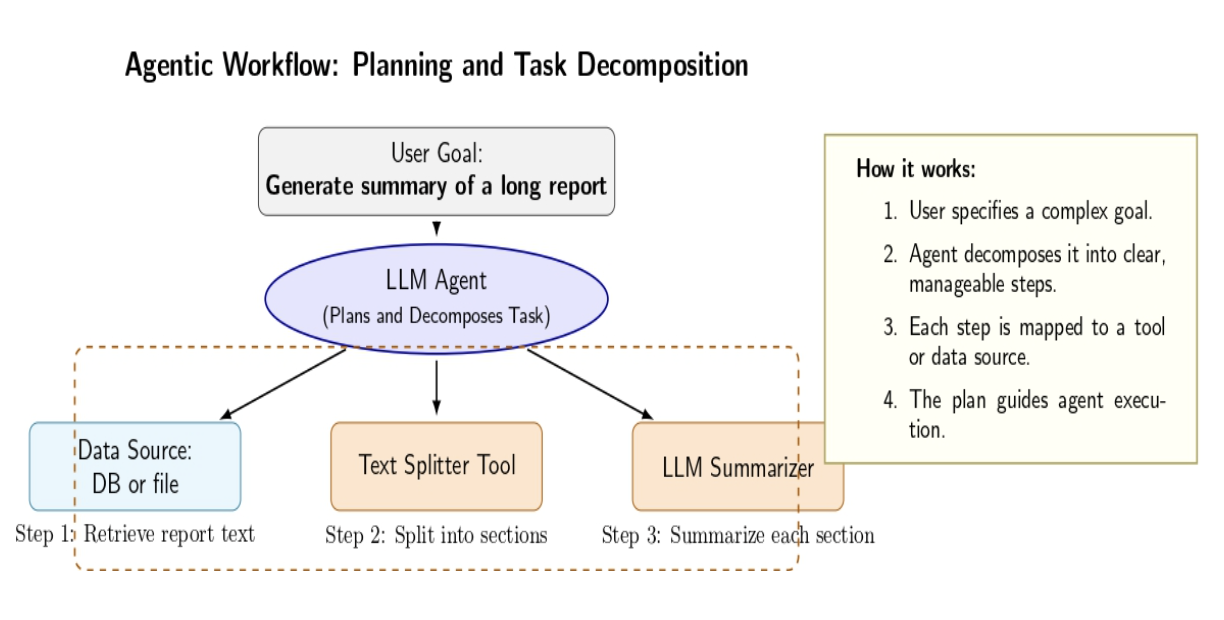
How can we get AI agents to work autonomously like humans? This article demystifies their core workflow: through autonomous planning, tool use, reflection, and multi-agent collaboration, they can achieve capabilities beyond traditional automation. The piece also explores how frameworks like LangChain and AutoGen bring AI to life and how to design reliable feedback mechanisms.
This article systematically compares the architectures of various large models like DeepSeek-V3 and Llama 4. It dives deep into the evolution from multi-head attention to grouped-query attention and multi-head latent attention, and explains how Mixture-of-Experts models achieve efficient inference through sparse activation.
Learn how to use uv and PEP 723's inline metadata feature to develop self-contained Python scripts. Not only can you automatically manage dependencies in a temporary virtual environment, but you can also integrate pytest for testing, making your automation scripts more reliable and easier to maintain.
PyPI was hit by a phishing attack. Attackers used the lookalike domain pypj.org to create a fake website, tricking users into leaking their credentials. This led to malicious code being injected into packages like num2words. The incident is a stark reminder of the importance of enabling two-factor authentication (2FA) and using hardware security keys.
Execute arbitrary Python code with just a single comment? This article reveals a clever attack technique that constructs a 'polyglot' file—one that's both a valid Python script and a ZIP archive—to successfully exploit an interpreter feature and achieve code injection!
Ever wonder why Flask's global objects like request work flawlessly in a multi-threaded environment? This article demystifies Flask's core context mechanism, explaining how the application and request contexts work together to ensure data isolation.
AI's boom owes a lot to Python, but are AI companies starting to cannibalize the community? The article points out that many companies are reaping the benefits of the Python community while giving little back. As 'AI crash course' topics dominate tech conferences and entry-level jobs dwindle due to AI, we have to ask: in our rush to embrace AI, are we undermining the very foundations of the Python community?
🐿️
Projects & Resources
× 12A full-featured video and media CMS built with Python/Django and React. You can set up a small to medium-sized video and media portal in minutes. (3.6K stars)
An OSINT (Open Source Intelligence) tool developed in Python for deep web investigations. Input a search query, and it scrapes relevant .onion sites via Ahmia.fi to extract emails, metadata, keywords, images, and social media info. (1.3K stars)
An open-source intelligent assistant that supports models like Claude and Gemini. It provides a CLI, a frontend, and supports local, Docker, and E2B execution environments. Core capabilities include research, fact-checking, content generation, data analysis, software development, and workflow automation. (2.8K stars)
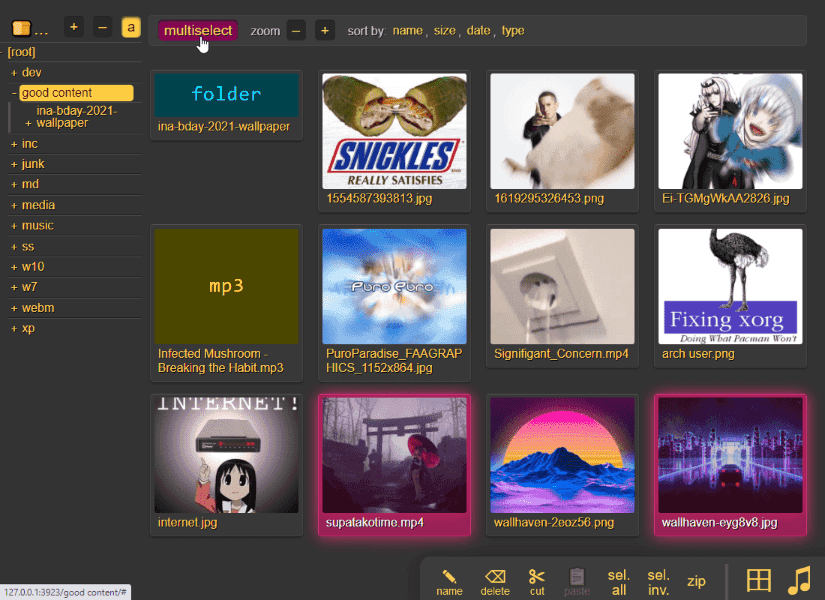
A portable file server with resumable uploads/downloads, deduplication, WebDAV, FTP, TFTP, zero-config setup, media indexing, and thumbnail generation. All features are packed into a single, dependency-free file, supporting multiple protocols and mobile apps. (17.1K stars)
An AI development cookbook that guides you in building AI systems. It provides code snippets that can be easily integrated into your own projects, covering topics like Python, OpenAI, agents, LLMs, and Anthropic. (2.5K stars)
A full-stack framework for developing multi-agent systems with memory, knowledge, and reasoning capabilities. It supports five levels of complexity, from simple tools to sophisticated agent teams, and offers a unified model interface, high-performance architecture, and built-in search and storage. (31K stars)
A powerful text-to-speech tool that quickly converts ePub, PDF, or text files into high-quality audio with synchronized subtitles. It supports multiple languages and voices, making it perfect for creating audiobooks, video voiceovers, and more.
A collection of productivity commands designed for the Claude Code CLI. It automates development workflows, checks code quality, manages sessions, and includes useful commands for cleaning projects, smart commits, code formatting, test fixing, and code reviews, making your AI assistant feel more like a senior engineer.
An open-source library from Google that uses large models to extract structured information from unstructured text. It features precise source attribution, reliable structured output, optimized handling of long documents, and interactive visualization, supporting both cloud and local models. (1.3K stars)
A Python library built on the Skia graphics engine that provides a clean and fluent API for creating beautiful text images. It supports rich styles like gradients, shadows, and outlines, and features automatic font fallback, advanced typography, and both vector and raster output. Perfect for social media, video overlays, and digital art.
Converts HTML to Markdown format. It supports the full range of HTML5 elements, enhanced table handling, type safety, metadata extraction, and streaming. It also provides a CLI tool and custom converters, with over 91% test coverage.
A tool that lets you open, create, edit, run, and save Jupyter Notebooks right in your terminal. It uses a Textual-based interface, executes code via jupyter_client, supports syntax highlighting for various file formats, and can even render images and HTML output.
🐢
Podcasts & Videos
× 1Barry Warsaw, Paul Everitt, Carol Willing, and Brett Cannon join the show to share stories from Python's history, including how 'import this' came to be and what the very first PyCon was like.