Python 3.14 optimizes asyncio in GIL-free builds through improved task management and thread state storage, boosting single-threaded performance by 10%–20% while enabling true parallel scaling in multi-threaded scenarios. Benchmarks show aiohttp throughput nearly doubling, with significant TCP improvements that help network and I/O applications better leverage multi-core systems.
TL;DR
Google sunsets Pytype, reshaping the type-checking landscape; asyncio scalability is measured on free-threaded Python, PEP 803 proposes a stable ABI, and the $660 dual-arm XLeRobot turns heads.
🦄
Articles & Tutorials
× 12Google announces the end of maintenance for Pytype, the type checker that ran for 13 years, stopping at Python 3.12. Its bytecode analysis architecture proved to be a fatal weakness, unable to keep pace with Python's rapidly evolving type system. While Pytype excelled at cross-function boundary flow analysis and handling large codebases, its batch processing mode couldn't meet modern development demands for incremental checking and LSP integration.
When compilers optimize seemingly O(n) loops into constant-time operations, how do you ensure these optimizations remain effective? This article demonstrates using CPU instruction counting instead of runtime measurements through Numba and LLVM examples. This technique reliably detects whether the compiler actually performed expected optimizations, preventing performance regressions.
Python 3.14 introduces REPL syntax highlighting, but the default colors might clash with your editor. Using the _colorize module's set_theme function, you can customize colors for keywords, strings, comments, and other elements. Combined with the PYTHONSTARTUP environment variable, your personalized color scheme automatically activates on every startup.
Semlib offers functional programming primitives described in natural language, enabling data processing pipelines with map, reduce, sort, and other operations. It breaks complex tasks into smaller steps, avoiding the inefficient practice of dumping all data directly into LLMs. Through structured computation and concurrent processing, it not only improves result quality but also handles data at any scale while supporting cost optimization and model selection.
Introduces Google's open-source build tool Bazel, which precisely tracks external dependencies and internal module relationships through dependency graph management, avoiding unnecessary redundant development. It supports polyglot development, such as seamless Rust extension integration, with value becoming increasingly apparent as project complexity grows.
PEP 679 proposes supporting assert (expr, msg) parentheses syntax, addressing the issue of beginners accidentally disabling assertions through parentheses misuse while improving the formatting experience for multi-line assertions.
PEP 803 proposes making the PyObject struct an opaque type, allowing Python 3.15's stable ABI to support both free-threaded and GIL development modes simultaneously, requiring extension modules to migrate to new APIs for lock-free concurrency support.
Explains how to deploy large models locally using Ollama, enabling interaction with local LLMs through chatlas (R) and ellmer (Python) packages, avoiding data privacy risks while enjoying AI-assisted programming experiences.
10 How to Make AI "Understand" Web Pages? Analyzing Browser-Use's Three Core Technical Modules bestblogs.dev
Browser-Use is an AI-driven browser automation tool. This article dissects its three core technical modules: DOM tree parsing (including JavaScript-side recursive traversal, Python-side tree construction, interactive element identification, and visual annotation), memory modules (MessageManager's message management, truncation strategies, and mem0-based memory compression), and tool registration and management (built-in Action collections, decorator registration mechanisms, and tool invocation workflows).
Anthropic shares how to develop high-quality tools for AI agents. Through MCP, agents gain access to hundreds of tool capabilities, using an iterative process of prototyping, evaluation testing, and collaborative optimization to optimize token efficiency and provide meaningful contextual feedback, enabling agents to effectively solve complex real-world tasks.
Google Chrome engineers reflect on Chrome's 17-year journey since its 2008 birth: from the initial multi-process architecture revolution to V8 engine performance breakthroughs, Chrome has consistently evolved around four core principles—speed, security, stability, and simplicity. Through innovations like isolated tab processes, rendering pipeline reconstruction, and AI feature integration, the browser has evolved from a simple web viewer into a modern web application platform.
🐿️
Projects & Resources
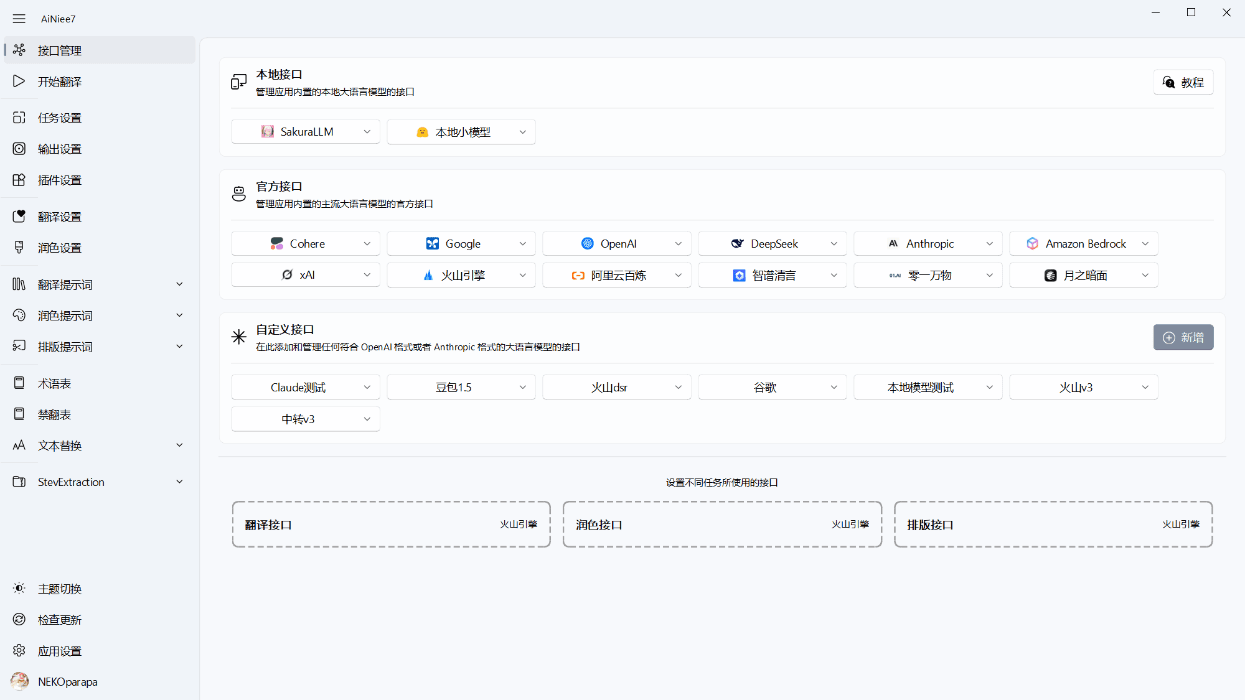
× 12An AI translation tool focused on one-click automatic translation of complex long-form content like games, books, subtitles, and documents. Supports multiple formats including RPG/SLG games, Epub/TXT novels, Srt/Vtt/Lrc subtitles, and Word/PDF/MD documents. Features lightweight translation formats, chain-of-thought translation, AI glossaries, and contextual associations, offering one-click AI polishing, formatting, and terminology extraction. (3.5K stars)
A versatile AI virtual assistant application built with Python and GTK, integrating voice conversations, document chat, web search, terminal command execution, and more. Features long-term memory, extension systems, configuration file management, and a built-in file manager. Supports Markdown and LaTeX rendering with rich customization options and theme settings.
An AlphaGo-inspired reasoning-based RAG system that uses tree search to simulate how human experts navigate and extract knowledge from long documents. Requires no vector databases or document chunking, using document structure and LLM reasoning for retrieval. Converts PDF documents into semantic tree structures, supporting complex document analysis for financial reports, academic textbooks, legal technical manuals, and more. (2.5K stars)
A low-cost dual-arm mobile home robot platform starting at $660, assembled in under 4 hours. Supports multiple control methods including keyboard, Xbox controller, Switch controller, and VR headsets, with Bluetooth wireless control requiring no WiFi connection. (3.1K stars)
A comprehensive multimodal document processing RAG system built on LightRAG, supporting unified processing and querying of various content types including text, images, tables, and mathematical formulas. Provides end-to-end multimodal pipelines, completing everything from document parsing to intelligent Q&A in one stop. (4.9K stars)
A meta-agent framework for developing high-performance multi-agent systems, using recursive hierarchical structures to solve complex problems. Supports parallel problem-solving, clear debugging structures, and proven performance. Built on AgnoAgents, integrating FastAPI, React, LiteLLM, and other tech stacks, with E2B sandbox execution environments and enterprise-grade S3 storage support. (1.5K stars)
An all-in-one desktop application built with Python and PySide6, designed for network engineers, students, and tech enthusiasts. Integrates multi-protocol terminals (SSH, Telnet, serial), SNMP topology mappers, network diagnostic tools, security toolkits, and more. Supports subnet calculators, port scanning, CVE queries, password strength testing, file hash calculations, and more.
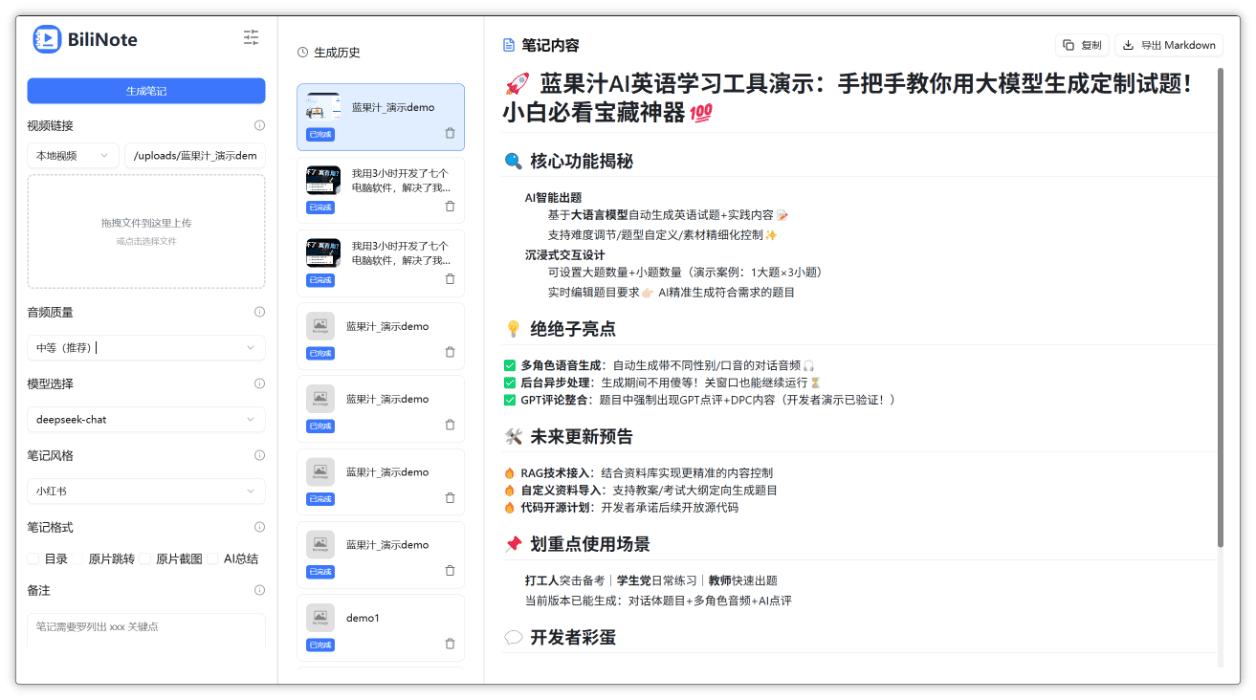
An open-source AI video note-taking assistant that automatically extracts content from Bilibili, YouTube, TikTok, and other video links to generate well-structured Markdown notes. Features multimodal video understanding, local audio transcription, GPT model summarization, automatic screenshot insertion, and original video jump links. Offers Windows desktop and Docker deployment options. (3.6K stars)
A Docker-deployed AI-driven research platform using multi-agent systems (planning, research, reflection, writing), integrating advanced RAG pipelines and dual BGE-M3 embedding technology. Supports PDF, Word, and Markdown document processing with semantic search and web integration capabilities. Features local LLM support, PostgreSQL vector storage, real-time progress tracking, and more. (1.2K stars)
A Python URL parsing and manipulation library offering a clean API for parsing, building, and manipulating URLs. Supports flexible handling of query parameters, paths, fragments, and other URL components, making it more user-friendly than the standard urllib library. (2.7K stars)
A multi-platform content download and API data processing tool supporting TikTok, Twitter, Weibo, and more. Provides user information retrieval, video/image gallery downloads, live stream capture, bullet comment forwarding, and other features. Integrates various algorithms and utility classes with batch processing and custom configuration support. (1.8K stars)
An FFmpeg-based multi-platform live stream automatic recording client covering 40+ mainstream domestic and international streaming platforms. Supports loop monitoring with instant recording when streams go live, scheduled recording tasks, multiple output formats, and automatic transcoding. Offers Windows, macOS, and Web support with batch recording, message notifications, recording previews, and more. Supports platforms like TikTok, Kuaishou, Huya, Douyu, Bilibili, Twitch, and others. (2.2K stars)