A PyPy core developer shared 7 years of real-world experience optimizing PyPy at a high-frequency trading firm during the CPython Core Dev Sprint. The talk dives deep into the similarities between CPython JIT and PyPy JIT, revealing the challenges that tracing JITs face in production code, including trace blockers and unpredictable performance patterns.
TL;DR
Real-world JIT tracing and GC work for free-threaded Python push performance forward, while a dependency-confusion tale shows how one researcher breached Apple, Microsoft and dozens more — a wake-up call for package security.
🦄
Articles & Tutorials
× 12The author shares hands-on experience building a Python compiler that transforms native Python code into cross-platform machine code through symbol tracing and IR generation. Drawing inspiration from Unity's IL2CPP architecture, the solution first generates C++ source code before compiling to executables that run without an interpreter. Starting from the pain points of AI model distribution, the author explores lighter-weight alternatives to containers, offering fresh perspectives on Python performance optimization.
This PEP proposes mixing synchronous and asynchronous context managers within a single with statement, aiming to solve the "staircase of doom" deep nesting problem in existing code and improve readability. Based on research across industrial codebases, the proposal found that 19% of async functions also use synchronous context managers, and the new syntax would significantly enhance the developer experience.
The author released a new version of django-watchfiles that replaces Django's default file polling mechanism with the Rust-based watchfiles library. This tool achieves more efficient auto-reloading through the operating system's file monitoring APIs, reducing CPU usage from 10% to 0% in medium-scale project tests. Compared to the Watchman solution that requires additional maintenance, django-watchfiles is simpler to install and more reliable.
A hands-on account of using Cursor AI to migrate a container test suite from Bash to Python. With simple prompts, Cursor AI automatically analyzed Bash scripts and generated corresponding Python libraries, plus created a complete PyTest test suite, saving approximately 1.5 months of development time throughout the migration process.
An in-depth look at garbage collector optimization techniques in Python 3.14's free-threaded version, comparing GC implementation differences between traditional GIL and free-threaded versions. The article introduces three key optimizations: "mark alive" phase, software prefetching, and intelligent GC triggering. These improvements achieved significant performance gains in pyperformance benchmarks, laying crucial groundwork for practical GIL-free Python.
Wasmer launches a WebAssembly-based Python edge computing solution that achieves near-native performance in sandboxed environments through WASIX technology. It supports mainstream frameworks like FastAPI, Django, and Streamlit, is compatible with native modules like numpy and pandas, and provides multithreading and WebSocket support. Compared to Cloudflare Workers and AWS Lambda, it offers better compatibility and faster cold start times.
08 Dependency Confusion: How I Hacked Into Apple, Microsoft and Dozens of Other Companies medium.com
A security researcher reveals a novel supply chain attack method by uploading malicious packages with the same names as internal enterprise packages to public repositories. The attack exploits package manager priority confusion and successfully infiltrated dozens of major companies including Apple and Microsoft. The article details attack principles, implementation processes, and protection recommendations, sounding an alarm for developers about dependency management security.
This article shows how to leverage Python's powerful introspection capabilities to automatically check naming conventions in Django projects. By combining Django's system check framework, the author implemented automatic validation of DateField and DateTimeField naming standards, effectively preventing potential issues caused by field type confusion.
The author surveys universally recognized core concepts in computer science, from 16th-century binary numbers to 1970s public-key cryptography, covering fundamental concepts like arrays, hash tables, call stacks, and virtual address spaces.
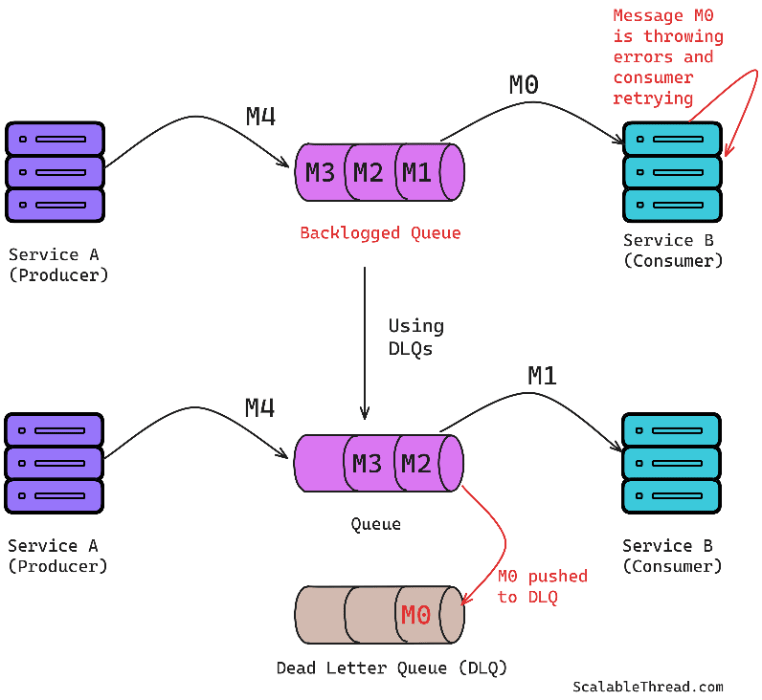
An in-depth analysis of core challenges facing event-driven systems in large-scale applications. Using vivid analogies, it explains key issues like schema evolution, debugging complexity, message reliability, and idempotency, while providing practical solutions including schema registries, distributed tracing, and dead letter queues.
The author proposes a "two-way door" decision framework that categorizes technical decisions into reversible and irreversible types. Through rapid risk assessment, it applies fast trial-and-error strategies for reversible decisions (like feature flags and internal library replacements) while handling irreversible decisions (like data migrations and architecture changes) with caution. This approach avoids over-investing in reversible decisions while ensuring the safety of high-risk decisions.
🐿️
Projects & Resources
× 12Google's open-source pre-trained time series foundation model designed specifically for time series forecasting. The latest version, TimesFM 2.5, uses 200M parameters, supports up to 16k context length, and can perform continuous quantile prediction. (5.8K stars)
A Python command-line interpreter with integrated large language models developed by KnownSec, supporting natural language descriptions that automatically generate and execute Python code. It offers both task mode and Python mode, handling various data engineering tasks like cleaning, transformation, and analysis without manual coding or copy-pasting. (2.4K stars)
An automated ticket purchasing tool for Damai.cn built with Selenium and Appium, supporting both web and mobile platforms. It allows configuration of audience members, cities, dates, sessions, and prices to achieve zero-latency automatic ticket purchasing, with support for flow monitoring and automatic order submission. (3.5K stars)
An innovative AI memory storage solution that encodes text data as QR codes stored in MP4 video files, enabling millisecond-level semantic search. Compared to traditional vector databases, it reduces storage space by 50-100x, requires no database infrastructure, and supports offline operation. Through video codec compression advantages, it provides a portable, efficient knowledge base solution. (9.2K stars)
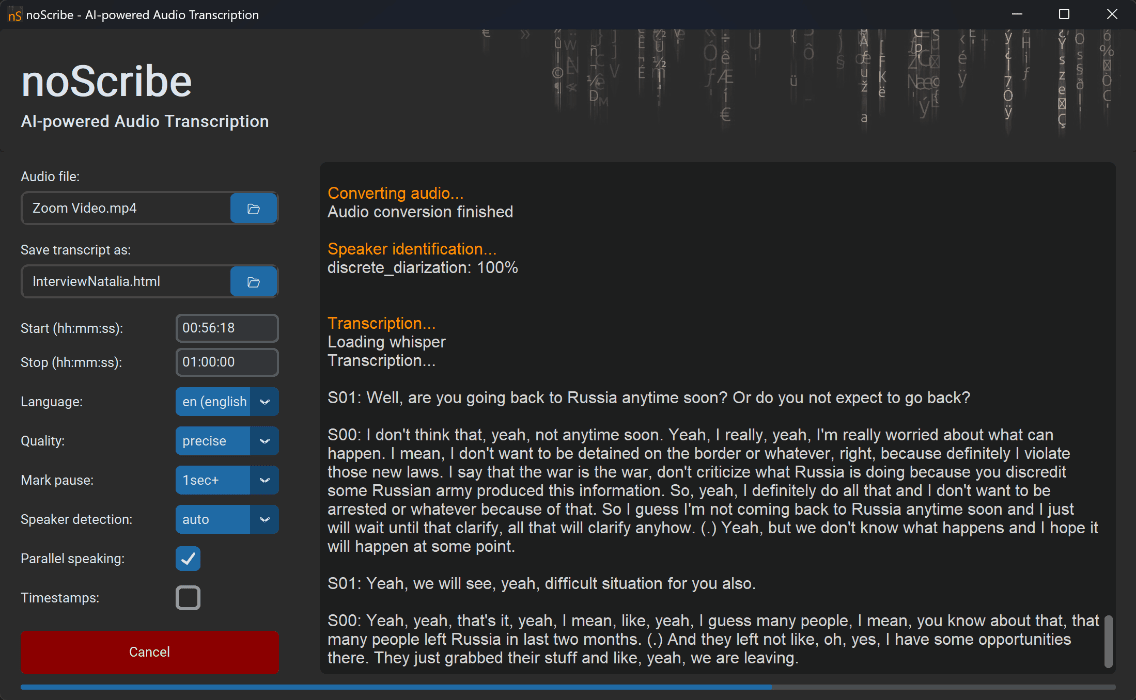
Built on OpenAI Whisper and pyannote technology, supporting speaker identification and transcription in 60 languages, running completely locally without internet connection. The built-in editor allows proofreading and correcting transcription results, with advanced features like pause markers and overlapping speech detection. (1.4K stars)
An MCP integration platform that enables AI agents to reliably use thousands of tools. It provides a unified MCP router and 50+ production-grade MCP servers, supporting enterprise-level OAuth authentication for mainstream services like GitHub, Gmail, and Slack. It supports both self-hosted and cloud service deployment options, providing Python and TypeScript SDKs plus REST API. (4.4K stars)
A powerful debugging dashboard designed specifically for FastAPI applications, providing real-time monitoring of HTTP requests, SQL queries, and exceptions. It integrates with just one line of code and works out-of-the-box with zero configuration. It supports both SQL and NoSQL databases, featuring request-response capture, slow query detection, and exception stack tracing.
A next-generation Python web framework built on FastAPI, Starlette, and Pydantic. It provides Air Tags for rapid HTML encoding, Jinja template compatibility, HTMX-friendly integration, and Pydantic-driven form validation.
A modular AI runtime system for robots that supports creating and deploying multimodal AI agents in both digital environments and physical robots. It can process various inputs including web data, social media, cameras, and LiDAR, enabling physical actions like motion control, autonomous navigation, and natural conversation. It supports multiple platforms including humanoid robots, quadruped robots, mobile apps, and educational robots.
A fully automated encryption decryption and encoding cracking tool that can automatically identify and crack encryptions without knowing the key or encryption method. It supports 50+ encryption and encoding methods, including Base64, Morse code, Caesar cipher, Vigenère cipher, and other classic ciphers, as well as modern encryption like repeating key XOR. Using custom AI modules and natural language processing technology, most cracking tasks complete within 3 seconds, making it 7x faster than tools like CyberChef. (19.6K stars)
A lightweight persistent workflow system based on Postgres that adds persistent workflow and queue functionality to Python programs through simple function annotations. It supports automatic failure recovery, persistent queues, event handling, scheduling, and notifications without requiring additional infrastructure configuration.
A Python-based AI-driven online data information synthesis assistant that integrates multiple large language models for intelligent research. It uses Playwright for automated web browsing and Chainlit for interactive user interfaces. It supports multi-model research, automatic web browsing, content processing, token tracking, and high configurability, capable of automatically collecting and analyzing web information.